
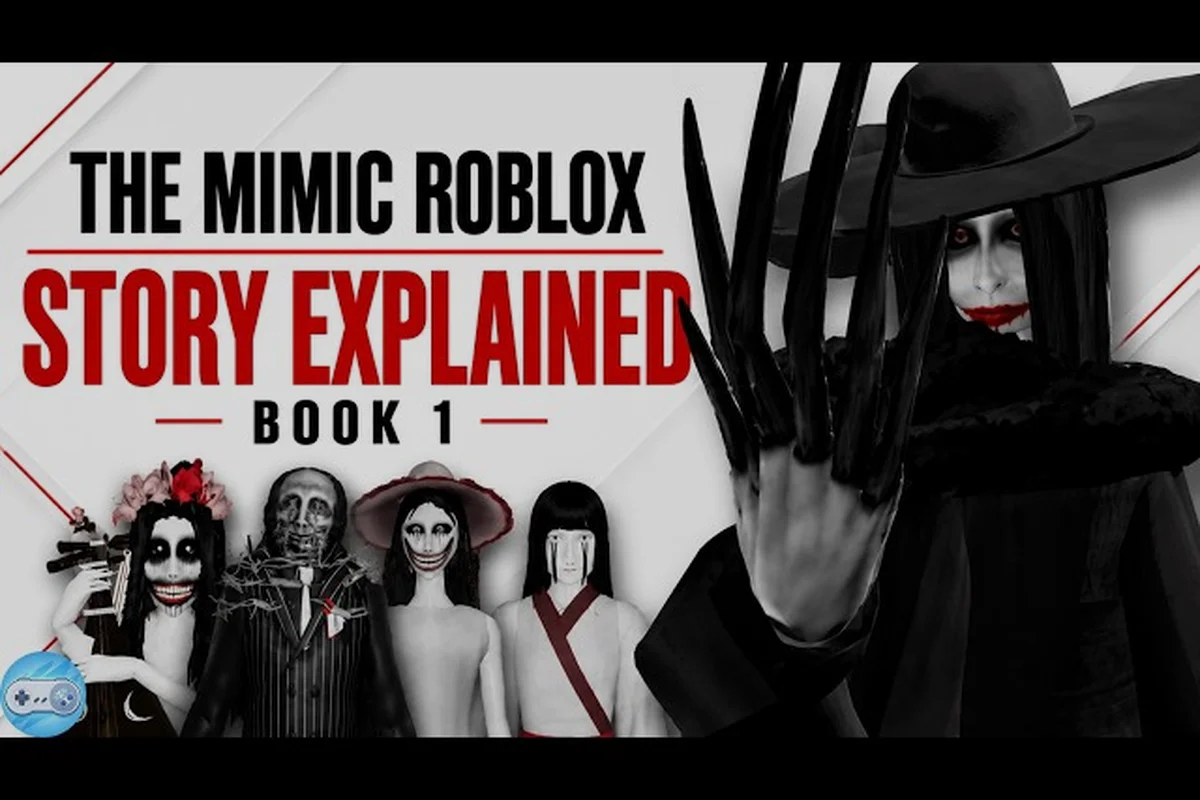
The Mimic Japanese urban legends matter because they connect each book’s horror to recognizable yōkai imagery, buried history, and eerie local folklore. Across four stories, the game transforms cultural references into playable threats while rewarding attentive readers who notice the pattern.
The Mimic Japanese Urban Legends: A Cultural Map
The clearest way to understand The Mimic Japanese urban legends is to treat them as a cultural map rather than a list of isolated monsters. Control establishes the school, Jealousy shifts the horror into family conflict, Rage intensifies the pursuit of power, and Rebirth questions what survives after violence and shame. Each book borrows from a different corner of Japanese supernatural storytelling, although the exact historical boundaries should not be overstated.
The game’s imagery is especially effective because it does not present one creature as a textbook example of a yōkai. Instead, it combines bodily distortion, inherited objects, confined spaces, masks, bells, hands, and altered identities. That approach makes the folklore feel embedded in lived environments. A monster feels threatening because it occupies an ordinary place—a school, hotel, shipwreck, or hidden room—and turns familiar routines against the player.
| Book | Main cultural atmosphere | Recurring themes | Primary interpretive focus |
|---|---|---|---|
| Control | School horror and institutional secrecy | Authority, imitation, belonging | Fear of being watched and judged |
| Jealousy | Family tension and distorted intimacy | Envy, possession, resentment | Love turned into control |
| Rage | Escalating violence and humiliation | Fury, power, social collapse | The cost of losing restraint |
| Rebirth | Renewal, memory, and fractured identity | Reinvention, guilt, survival | What can be reborn after trauma |
This overview is useful for separating atmosphere from documented meaning. The four books establish distinct emotional tones, but an image resembling a traditional yōkai does not by itself prove that the developers intended a direct retelling of one specific legend. The safest approach combines environmental details, recurring symbols, and character decisions.
For the larger narrative structure behind each protagonist, consult the connected story explained. That overview helps separate book-level folklore from revelations that only become meaningful when later entries change the reader’s understanding of earlier events.
Folklore Versus Confirmed Story Facts
A useful reading framework has three layers. The first is the observable layer: masks, hands, shadows, bells, distorted rooms, and other details that appear in the environment. The second is the interpretive layer, where those details resemble concepts from yōkai, kaibyō, oni, and Japanese ghost stories. The third is the canonical layer, consisting of facts established by the story’s events, dialogue, choices, and endings.
| Evidence layer | Examples | What it can establish | What it cannot establish alone |
|---|---|---|---|
| Observable | Visual design, sounds, enemy behavior | Presence and atmosphere | Exact source legend |
| Interpretive | Cultural resemblance and symbolism | Possible influence | Definitive authorial intent |
| Canonical | Plot, dialogue, choices, ending | Story meaning within the game | Every real-world origin |
This distinction prevents two common mistakes. The first is calling every frightening face a named yōkai without evidence. The second is dismissing cultural influence merely because the game combines traditions with original fiction. The strongest reading respects both the Japanese folklore inspiration and the game’s own evolving mythology.
Follow the books in release and narrative order
A cultural reading becomes clearer when the books are approached in release and narrative order. Control introduces the central mysteries, while the later books intensify them from different emotional directions. The Control’s Book overview offers a focused starting point for its school setting and protagonist.
Read each story in three passes. First, identify the physical location and immediate threat. Second, note recurring symbols such as hands, masks, mirrors, doors, or distorted spaces. Third, connect those symbols to the protagonist’s choices and social environment. This process makes folklore analysis less about spotting a single monster and more about tracing how cultural motifs accumulate.
Yōkai Imagery and the Monster Design Language
The Mimic folklore inspiration is most visible in its use of ambiguous entities. Rather than assigning every supernatural being a single mythological identity, the game often focuses on actions associated with older tales: replacing a person, luring someone into an isolated place, repeating gestures, leaving behind hands or eyes, and emerging when social rules are broken.
Hands are particularly effective because they suggest reach without establishing a full body. They can appear in narrow passages, cling to walls, or redirect attention toward danger. This visual economy suits a game built around short encounters and environmental puzzles. The player understands the threat before learning its biography.
| Motif | Folklore association | Gameplay expression | Narrative function |
|---|---|---|---|
| Hands | Grasping spirits, punished limbs, restless dead | Sudden movement and blocked routes | Makes danger physically intrusive |
| Masks | Identity concealment, ritual performance, social roles | Visual distortion and altered faces | Questions who a character really is |
| Bells or chimes | Ritual warning, shrine practice, supernatural presence | Audio cues before danger | Links atmosphere to Japanese settings |
| Mirrors | Reflection, doubling, altered identity | Visual contradictions and imitation | Supports the theme of mimicry |
| Disordered rooms | Haunted places that resist ordinary order | Puzzles, changing routes, anomalies | Makes space itself unreliable |
Why Yōkai-Style Ambiguity Works
Traditional supernatural catalogs often describe a creature through a memorable habit, a cause of death, or a moral condition. The Mimic adapts that principle without limiting itself to encyclopedia entries. Enemies repeat behavior, react to sound, occupy thresholds, and punish familiar actions in unfamiliar ways.
The result is recognition before explanation. Players can identify danger from movement, audio, composition, and timing even when the creature’s origin remains uncertain. That creates room for player theory, but it also gives each book a distinct identity. Control emphasizes institutional pressure, while Jealousy gives that pressure a domestic shape.
For a closer look at recurring symbols and how they connect across books, the hidden-details guide provides useful context without treating every visual echo as an explicit code. The pattern is most revealing when it crosses book-specific boundaries: repeated thresholds, masks, mirrored spaces, and altered domestic objects can suggest how each chapter borrows from Japanese urban legends while changing the rules that make The Mimic dangerous. Comparing those details with each book’s setting reveals which motifs belong to the folklore inspiration and which are narrative reversals, so a visual echo becomes evidence rather than an assumed solution.
Sounds, Silence, and the Approach of the Supernatural
Japanese horror cinema often uses quiet domestic spaces, interrupted routines, and restrained sound before sudden violence. The game draws on that tension by making ordinary movement and faint noises meaningful. A corridor may feel threatening before a monster appears, while a repeated chime can function as an environmental warning.
This approach makes folklore part of the play process rather than background decoration. Players learn to listen, wait, and compare sounds before taking a route. Silence is not merely an absence of danger; it can indicate that a threat has changed position or that the player has missed an environmental cue.
Fear of Imitation and Replacement
The title itself suggests a threat built around copying. That theme connects to older stories of doppelgängers, transformed humans, and spirits that assume familiar forms, but The Mimic develops its own variation through identity and social roles. The danger is not simply seeing something that looks wrong; it is watching ordinary behavior become uncanny.
| Fear type | Cultural association | The Mimic expression | Best context for noticing it |
|---|---|---|---|
| Doppelgänger | A double reveals identity or fate | Features or roles appear copied | Character scenes and altered appearances |
| Shape-shifter | A spirit assumes human identity | Mimic behavior and imitation | Monster encounters |
| Family curse | Inherited trauma corrupts descendants | Jealousy and Rebirth conflicts | Repeated family symbols |
| Haunted institution | The school contains concealed history | Locked rooms and controlled routines | Control’s route and secrets |
The game’s most effective horror moments often work by interrupting a pattern. A room looks ordinary until one detail behaves incorrectly. A face resembles someone familiar but behaves differently. A sound announces a threat at the moment the player believes they understand the route.
The Mimic Stories Based on Japanese History
The Mimic stories based on Japanese history should be read as fictional uses of historical atmosphere, not documentary retellings. The books evoke eras, social pressures, architecture, school rituals, and supernatural traditions without claiming that every monster comes from a verified historical event.
Control draws heavily from the atmosphere of Japanese school settings. Institutional hierarchy, limited private space, restrictive corridors, and the authority of teachers or administrators create a believable foundation for pursuit. Historical texture often comes through objects and architecture rather than dates. A bell, a uniform, a wooden corridor, or a locked staff room can suggest a specific cultural setting without exposing the character to modern global culture.
Historical Texture Versus Direct History
A scene may borrow the visual language of a period while presenting an invented incident. This distinction is important when assessing claims about historical basis. The story’s emotional concerns can feel grounded in Japanese social experience while the plot itself remains fantasy.
| Cultural layer | How The Mimic uses it | Best source of evidence | Caution |
|---|---|---|---|
| School life | Authority, conformity, isolation | Architecture, rules, schedules | A school setting alone does not date a scene |
| Family structure | Obligation, inheritance, emotional control | Dialogue and recurring objects | Family conflict is not automatically historical |
| Ritual imagery | Bells, masks, offerings, shrine-like spaces | Environment and sound design | Ritual visuals may be atmospheric |
| Rural or coastal life | Isolation, old buildings, dangerous journeys | Map design and architecture | Generic remoteness is not proof of a real location |
| Supernatural belief | yōkai, ghosts, transformed bodies | Enemy design and story context | Similarity does not establish a direct retelling |
The four books combine these layers differently. Control’s institutional environment gives its folklore a social edge. Jealousy moves similar unease into a family setting, where possessiveness and inherited expectations become central. Rage pushes the imagery toward physical excess and public humiliation. Rebirth then asks whether identity can survive after it has been broken apart.
How Regional Settings Shape the Stories
Location is not decoration in The Mimic. The available settings—a school, hotel, shipwreck, and other isolated spaces—shape how folklore is encountered. Confined interiors make every noise meaningful and can evoke haunted-house traditions. Coastal or ruined environments add the vulnerability of people traveling beyond settled spaces.
The book sequence also changes what a setting symbolizes. A school may initially suggest discipline and routine, while the same architecture can later suggest institutional concealment. A family home can seem protective before it becomes a space where memories and resentment collide.
To place these themes in chronological order, compare the timeline of events and recurring entities. The timeline is useful for separating release sequence from inferred chronology and for identifying which interpretations remain dependent on later books.
The Four-Beast Framework
The four-beast idea gives The Mimic a larger mythic structure, connecting its Japanese urban-legend folklore across all four books instead of treating each threat as an isolated episode. Recurring identities, transformations, and relationships let investigators compare a shared curse with book-specific local spirits. Because the four transformations lens can place individual family, memory, and imitation clues into one chronology, the framework gives players a concrete trail to follow from first anomalous appearance to the final lore summary, including possible sources of book completion rewards and lore badges.
| Interpretation lens | What it helps readers compare | Main limitation |
|---|---|---|
| Four distinct beasts | Threat behavior and narrative roles | May flatten shared symbolism |
| Four transformations | How identity changes across books | Requires careful chronology |
| Recurring curse | Patterns in family, memory, and imitation | Much remains inferential |
| Book-specific local spirits | Immediate cultural atmosphere in each story | Does not explain cross-book continuity |
Cross-book continuity is where the game’s folklore becomes most rewarding. A repeated form, location, or phrase can acquire a new meaning after another story is completed. For that reason, lore hunting is most effective when players keep a simple record of appearances, likely parallels, and confirmed facts.
Reading The Mimic Book Lore Summary Across All Four Stories
A concise The Mimic book lore summary should preserve ambiguity without omitting the emotional arc. Control concerns a student caught in a controlled environment where identity, authority, and imitation converge. Jealousy moves the disturbance into intimate relationships, turning attachment into a source of instability. Rage escalates humiliation and anger, while Rebirth introduces the possibility—and danger—of becoming something new.
This four-book overview is not a substitute for a full recap, but it helps identify each entry’s central cultural lens by tracing how Japanese urban legends shape both the haunting mechanism and the protagonist’s emotional trajectory. Control draws on institutional haunting and doubles, Jealousy on cursed intimacy and inherited resentment, Rage on violent spirits, masks, and bodily excess, and Rebirth on renewal, memory, and fractured selfhood. The table then turns those distinct folklore influences into a direct comparison of character focus and emotional progression, clarifying how isolation can become suspicion, love can harden into control, restraint can erupt into violence, and collapse can lead toward reconstruction.
| Book | Character focus | Folklore lens | Emotional progression |
|---|---|---|---|
| Control | Identity under scrutiny | Institutional haunting and doubles | Isolation toward suspicion |
| Jealousy | Possession through attachment | Cursed intimacy and inherited resentment | Love toward control |
| Rage | Authority and humiliation | Violent spirits, masks, and bodily excess | Restraint toward eruption |
| Rebirth | Survival after transformation | Renewal, memory, and fractured selfhood | Collapse toward reconstruction |
Control: The School as a Folklore Vessel
Control uses the school as more than a level. Its corridors, rules, and controlled routines make the environment resemble a narrative institution: a place where identity is assigned, behavior is observed, and authority can define who belongs. The folklore works through repetition and confinement, which are central to many urban ghost stories.
The book’s clues often matter on two levels. A mask or face may represent a specific monster, while the way characters respond to it may expose a social truth. Reading only the creature encounter misses the more uncomfortable idea that ordinary institutional behavior can resemble imitation.
Jealousy: Domestic Horror and Inherited Resentment
Jealousy relocates the horror into relationships and family histories. Its Japanese urban legend atmosphere comes from the idea that home itself may become unsafe, and that affection can carry the same possessiveness as a curse. The strongest cultural parallel is not a single named spirit but the broader folk belief that intense envy and destructive attachment can disturb a household.
Objects carrying family memory become especially important. A ring, photograph, toy, or inherited possession can look harmless while preserving a chain of resentment. These details also prepare the larger lore, because repeated objects often reveal that the books are connected by more than surface-level location changes.
Rage: Violence, Masks, and Social Breakdown
Rage relies on spectacle and loss of control. Masks, crowds, bodies, and pursuit turn the protagonist’s inner state into a visible environment. The folklore inspiration here is less about careful concealment and more about the sudden release of forces that social rules were meant to suppress.
This makes Rage a strong contrast to Control. One book is built around surveillance and routine; the other is shaped by performance, humiliation, and eruption. Both use Japanese cultural atmosphere, but their emotional mechanisms differ enough to prevent the books from feeling like reskins.
Rebirth: Renewal as a Double-Edged Gift
Rebirth treats transformation as both promise and danger. Renewal may mean escape from an old identity, but it can also erase accountability, memory, or human connection. The book’s folklore mood is therefore ambiguous. A supernatural change can look like liberation from the bottom while becoming another form of entrapment.
That ambiguity supports the series’ central themes by tying each rebirth to the social conditions that created the identity being replaced. In The Mimic, inherited expectations, social fear, and imposed roles can determine whether a changed body becomes an escape from confinement or a new role imposed by the same community. Because transformation alters the visible surface without automatically correcting its cause, players must read the Japanese urban legends for who benefits from the renewal, who loses their memory or accountability, and whether liberation has merely rearranged the hierarchy.
Rewards, Badges, and the Value of Literary Observation
The lore theme also has a practical side: completion rewards can encourage players to engage with each book rather than rush only through objectives. Exact reward and badge requirements can change with updates, so players should verify the current interface before planning a route. The Nightmare badge and completion-reward guide provides a focused reference for the current reward structure and related requirements.
The important connection is thematic rather than cosmetic. Finding hidden clues rewards curiosity, while earning a book badge proves completion under the game’s specific conditions. A completionist can approach lore and progression as two views of the same goal: learning what happened and confirming that every required part of the chapter was finished.
Categories of The Mimic Book Rewards
The available rewards may include achievement-style badges, story progression, collectible-related completion, and mode-specific milestones. These categories should not be collapsed into a single “completion reward” claim, because a badge can certify a chapter, a difficulty, or a particular achievement condition.
| Reward type | What it generally represents | What lore adds |
|---|---|---|
| Story badge | Completion of a specific book or chapter | Encourages finding contextual clues |
| Difficulty badge | Success under defined challenge conditions | Rewards survival and route mastery |
| Completion reward | Recognition that required objectives are finished | Supports repeatability and tracking |
| Collectible milestone | Finding optional evidence or items | Directly rewards close observation |
| Mode reward | Achievement in a limited or special mode | Encourages broader play |
This distinction is especially important for The Mimic book completion rewards because badges can unlock after narrowly defined objectives, such as finishing one chapter under challenge conditions or locating a specific collectible, rather than after confirming a Japanese urban legend. For example, a story badge awarded at the end of a book may validate progression through that scenario, but it does not by itself validate the tale’s connection to real Japanese folklore. Lore conclusions still require corroboration from the book’s text, recurring symbols, historical references, and chronological sequence; reward names provide useful context for comparison, not proof.
Reading Rewards Without Overspoiling
A reward-focused player can keep a three-column log. In the first column, record the badge or completion condition. In the second, write what the player noticed during the run. In the third, mark whether the observation is confirmed by dialogue or merely inferred. This prevents a compelling visual connection from being mistaken for a confirmed origin.
For example, a recurring hand image might be recorded as Recurring Hand Motif, followed by its book appearances and any dialogue references. If later chapters establish a direct connection, the entry can be upgraded from theory to confirmed lore without rewriting the earlier observation.
The Mimic Book Badge Checklist
After finishing each book in The Mimic, use a practical checklist to audit your The Mimic book badge progress. Record which Japanese urban legend objectives were solved, which folklore clues appeared, and whether each discovery was based on direct evidence or inference. For example, a legend tied to Japanese history should include the source event, the relevant clue, and the final interpretation rather than only a completion percentage. This creates a traceable record of your The Mimic lore summary while separating verified discoveries from assumptions.
-
Confirm that every required objective is marked complete.
-
Review the reward or badge screen before leaving the chapter.
-
Record the difficulty or conditions attached to the award.
-
Note any hidden evidence that was easy to miss.
-
Separate visible symbols from confirmed explanations.
-
Compare the result with The Mimic book completion rewards from earlier books.
The resulting record is more useful than a simple completion percentage because it preserves the reasoning behind each interpretation. It also makes repeated runs more focused: players can revisit the book for missing evidence rather than replaying every mechanic blindly.
How Community Observations Should Be Treated
Community reports are valuable for spotting recurring visual details, unclear dialogue, and alternative interpretations. However, a popular theory is not the same as confirmed lore. The best community observation includes the chapter, scene, visual evidence, and any dialogue that supports it.
The distinction is particularly important for The Mimic folklore inspiration. Players often recognize broad categories such as yōkai, oni, or ghost traditions, but a recognized category may not identify a single historical tale. Community data can support a pattern when multiple independent players report the same detail across the same book and version.
| Player observation | Responsible interpretation | Stronger verification needed |
|---|---|---|
| “The enemy resembles a yōkai” | Visual comparison | Dialogue, official material, or repeated motif |
| “The mask has a ritual purpose” | Thematic hypothesis | Scene context and recurring use |
| “This family caused the curse” | Story inference | Explicit genealogy or event |
| “The same hand appears in every book” | Cross-book pattern | Multiple chapter sightings |
| “The ending confirms a historical event” | Usually too strong | Direct canonical evidence |
Community reports should also be dated. Updates may change dialogue, rewards, encounter behavior, or accessibility options. When a player says a symbol is missing, the answer may depend on the version they last played rather than on the symbol’s supposed meaning.
A Verification Ladder
Use a five-level verification ladder when evaluating The Mimic book lore summary claims. Level one is a visual resemblance. Level two is a repeated motif. Level three is contextual support from dialogue or environment. Level four is explicit confirmation in a later book. Level five is confirmation through official game material.
This framework is especially helpful when discussing The Mimic stories based on Japanese history, particularly claims involving the Japanese urban legend of a human-like figure disguising itself as another person. A shared visual motif in a The Mimic book lore summary is not sufficient to establish historical influence, so the assessment should separate documented game evidence from interpretation. It also lets readers identify where The Mimic deliberately leaves room for interpretation, especially when a repeated motif appears in dialogue or an environment but lacks explicit confirmation through official game material.
What Player Evidence Can Add
Strong community observations often focus on precise, repeatable details: where a symbol appears, which character reacts to it, whether it changes after a choice, and how the same sound is used in multiple books. Those details improve the shared reading of the game because they are less dependent on personal interpretation than broad claims.
A productive observation should specify book, location, trigger, and result. For instance: “In Jealousy, the hand-shaped mark appears in the family home after the choice involving the remembered object; the subsequent route changes.” That format can be checked against a replay, while a statement such as “the story is definitely about jealousy” cannot be verified in the same way.
A Practical Method for Tracing Folklore Across the Series
A focused folklore hunt does not require collecting every secret. It requires a repeatable system that records visual motifs, sounds, dialogue references, locations, and story outcomes without confusing them. The method works equally well for a first playthrough and a focused second run.
First Pass: Record the Surface
During the first playthrough, focus on what appears rather than what it supposedly means. Record masks, hands, bells, mirrors, altered photographs, unusual household objects, blocked rooms, and sounds that repeat, since these surface details often carry the clearest traces of The Mimic’s Japanese urban legends and folklore inspiration. Include the book, chapter, and rough location so each clue remains traceable later; for example, note whether a mask first appears in a chapter’s background, whether a photographed figure changes between views, or whether a bell repeats before a door opens. This creates an evidence log for comparing later lore, book rewards, and completion badges without interrupting the story itself.
Do not interrupt major decisions with long speculation; a short note is enough when a mask, bell, mirror, or altered photograph raises a possible Japanese urban-legend connection. For example, if a mask appears beside a repeated bell sound, note both details and mark the possible link as unconfirmed rather than interpreting it outright. This keeps the evidence log usable for later comparisons with The Mimic’s folklore inspiration, book rewards, lore summaries, and completion badges while preserving the story experience.
Second Pass: Compare Across Books
After completing the four entries, group the notes by motif. A motif that appears once may support that book’s local mood. A motif repeated in two books may suggest continuity. Repetition across all four books deserves the closest comparison with the four-book cultural structure.
| Finding | Interpretation priority | Next action |
|---|---|---|
| One appearance | Book-specific atmosphere | Record context only |
| Repeated in two books | Possible series motif | Compare scenes and meanings |
| Appears after related choices | Possible branching symbolism | Revisit the relevant decision |
| Confirmed in dialogue or ending | Canon-supported | Treat as established lore |
| Community-only correlation | Unverified theory | Keep separate from canon |
Third Pass: Test Consequences
Finally, compare how motifs affect choices and routes. Does the recurring object block a door, mark a path, alter a character’s response, or reveal a hidden room? Gameplay repetition strengthens the connection because it demonstrates that the symbol matters inside the experience, not merely in set dressing.
The goal is not to force every cultural reference into a single unified explanation. Sometimes a mask functions as a character image, a warning device, and a horror visual at once. Strong analysis permits several functions when the game provides evidence for each one.
A Compact Observation Log
| Field | Example entry | Why it helps |
|---|---|---|
| Book | Jealousy | Establishes narrative context |
| Chapter | Chapter 2 | Makes the clue locatable |
| Motif | Hand-shaped mark | Identifies the recurring image |
| Trigger | Relevant family-object choice | Shows interaction with story |
| Interpretation | Inherited resentment | Preserves thematic reading |
| Confidence | Mixed | Distinguishes evidence from theory |
This log is intentionally simple. It is more reliable than a long speculative document because it preserves where each idea came from. It also supports the broader goal of reading The Mimic Japanese urban legends without losing sight of ordinary survival goals.
Frequently Asked Questions
Are The Mimic Japanese urban legends based on real historical events?
The books use Japanese history and folklore as atmosphere rather than presenting verified historical retellings. Their schools, family conflicts, rituals, and supernatural figures are fictional, while the imagery draws on cultural traditions such as yōkai, masks, bells, ghosts, and inherited curses.
Does The Mimic folklore inspiration include named yōkai?
Some enemies and visual motifs resemble broad categories associated with yōkai and kaibyō, but similarity alone does not confirm a specific source. A named connection should rely on dialogue, repeated narrative evidence, or official material; otherwise, it is better described as thematic resemblance.
How much do The Mimic stories based on Japanese history influence the plots?
Their influence appears mainly through settings, social pressure, family expectations, institutional authority, ritual objects, and the treatment of supernatural identity. The plots still form an interconnected fictional narrative across Control, Jealousy, Rage, and Rebirth rather than documenting separate historical incidents.
What do The Mimic book rewards include?
Depending on the current game version, rewards can include story badges, difficulty milestones, completion recognition, collectible achievements, and mode-specific awards. Requirements should be checked in the reward interface because update details may vary, while detailed badge conditions are covered in the dedicated reward guide.
Can a The Mimic book completion reward prove a hidden lore theory?
No. A reward confirms that an in-game condition was met, but it does not validate a folklore interpretation. The stronger evidence comes from scene design, dialogue, repeated symbols, character decisions, and later-book confirmations, with community reports serving as supporting observations rather than final authority.