
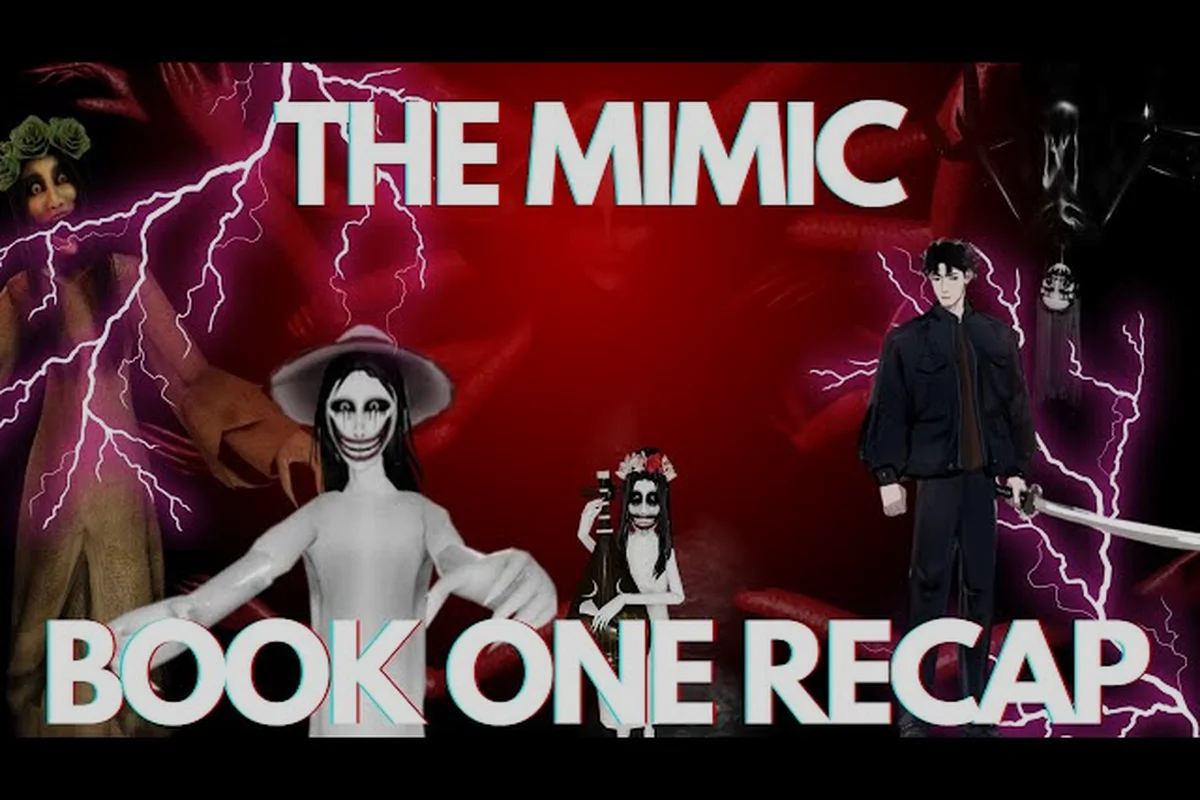
The Mimic timeline of events matters because its four books—Control, Jealousy, Rage, and Rebirth—build a connected cursed story rather than four isolated adventures. Read in order, the releases reveal how the hands, Hiachi, and Omukade turn fear into a cycle of possession, resistance, and survival.
The Mimic timeline at a glance
The clearest way to understand The Mimic timeline of events is to separate publication order from story order. The game began with Control, continued through Jealousy and Rage, and then reached Rebirth. Those release stages form the outer chronology, while the internal sequence is revealed through memories, testimony, recurring locations, and changes in the threat called Omukade.
That distinction prevents a common reading mistake. A later book may revisit an earlier period without replacing it with a new beginning. It can expose what happened before a protagonist understood the curse, clarify an event glimpsed in a prior volume, or show the consequences of a choice whose outcome was previously hidden.
| Release stage | Volume | Main narrative function | Timeline position |
|---|---|---|---|
| First release | Control | Establishes the original incident and the threat | Earliest revealed events |
| Second release | Jealousy | Expands the conflict and introduces deeper personal motives | After Control |
| Third release | Rage | Escalates the curse through anger and destructive transformation | After Jealousy |
| Fourth release | Rebirth | Resolves or reframes earlier conflicts through a new cycle | Latest major stage |
Release history versus narrative chronology
The Mimic chapter release history follows this four-volume sequence, but story chronology is more flexible. Control contains the clearest foundation: an ordinary setting becomes contaminated by a presence that can imitate or inhabit human form. Later books build on that premise rather than replacing its rules.
The story timeline therefore works on three levels: the order in which the four Mimic volumes were released, the order events are revealed through testimony and surviving records, and the causal sequence that links each incident to the next. This distinction matters because a later volume may disclose an earlier event through a new witness account, such as evidence tied to the Omukade curse, without changing the original chapter order.
-
Release chronology: Control came out first, followed by Jealousy, Rage, and Rebirth.
-
Character chronology: Events are reconstructed from a protagonist’s limited knowledge, which grows as more testimony becomes available.
-
Causal chronology: The curse spreads because fear, jealousy, rage, and repeated acts of violence reinforce one another.
This layered design makes The Mimic true story less a matter of choosing one scene over another and more a matter of identifying the chain of cause and effect. A useful broader reading appears in the complete The Mimic lore overview, while this guide focuses on placing the major events in order.
Control and the first corruption
Control establishes the central rules that make the rest of The Mimic timeline of events understandable. The danger is not simply a monster hunting isolated characters; it is a supernatural influence that gains strength through fear and imitation. The hands are part of that influence, emerging as physical signs of a presence that can cross the boundary between the seen world and the identity of a victim.
The volume’s earliest important event is the appearance of the anomaly. Before it can corrupt people, it exists as an unexplained pattern: unusual behavior, displaced objects, sounds from empty rooms, and signs that something has copied a familiar presence. These details matter because later revelations tend to reinterpret them rather than contradict them.
The first chain of cause and effect
| Event | What changes | Why it matters later |
|---|---|---|
| The anomaly appears | Ordinary spaces become unstable | Creates the conditions for possession |
| The hands manifest | Physical horror becomes visible | Connects the threat to bodies and identities |
| A human identity is compromised | Fear changes direction toward a victim | Explains why mimicry is more dangerous than pursuit |
| The first resistance occurs | Survivors learn the threat can be resisted | Creates the pattern followed in later books |
The first resistance is crucial because it proves that the curse has rules. It does not grant total control from the beginning, and characters can still act, remember, or refuse surrender under the right conditions. However, each failed defense creates more material for the curse: terror, guilt, resentment, and the decision to escape rather than understand.
The original incident is not best treated as one precise moment. It is the chain that begins with the anomaly’s arrival and ends when the first group understands that the hands are manifestations rather than independent creatures. The chronology begins with contamination, not with the first visible monster.
What the hands actually represent
The Mimic lore of the hands centers on their role as evidence of the curse spreading through identity. They are recurring bodily signs that a victim has been touched, replaced, or overwhelmed by something that wears human form. Because they appear across different situations, they provide a visual through-line connecting the books.
| Hand-related clue | Interpretation | Narrative function |
|---|---|---|
| Hands appear near someone already under influence | The threat can reach beyond direct contact | Shows escalating range |
| A hand imitates a familiar gesture | Mimicry extends into behavior | Connects it to identity theft |
| Hands disappear after resistance | The bond can be broken, though not erased | Prevents a simplistic “death equals cure” rule |
| Hands return in later memories | The same force persists across generations or victims | Connects the books into one history |
Their recurrence is a narrative device rather than a simple health bar. When a hand appears, the story is asking what has been taken, copied, or concealed. In later volumes, that question becomes more personal: not only what the curse can do, but what people do to one another after they realize it is present.
Jealousy and the spreading human cost
Jealousy advances The Mimic timeline of events by turning the original supernatural disaster into a story about strained human relationships. The title matters thematically: resentment offers the curse a social form, while possessiveness creates pressure to control the people and identities around a vulnerable character.
The volume does not begin a separate origin story. Instead, it revisits the aftermath of Control and asks what happens when survivors carry knowledge the wider community does not. Fear changes the behavior of ordinary people, and that behavior makes them resemble the mimics they are trying to resist.
Jealousy’s place in the sequence
| Narrative element | Function in Jealousy | Connection to Control |
|---|---|---|
| Unexplained disappearances | Show that the curse remains active | Extend the initial anomaly |
| Distrust among survivors | Reveal human responses to fear | Explain why isolation accelerates danger |
| Jealousy as emotional leverage | Gives the threat a new route inward | Builds on imitation and attachment |
| Memory fragments | Clarify what happened before the crisis | Reworks the reader’s understanding of Control |
The most important change is emotional. In Control, the question is whether the threat is real and how it takes hold. In Jealousy, the question becomes whether people will turn on one another before the threat has even appeared. Resentment can create a miniatures version of the mimic’s behavior: people begin replacing trust with suspicion and treating others as obstacles rather than allies.
That parallel prepares the third volume. When jealousy is already weakening relationships, rage has a much easier environment in which to grow. In The Mimic’s timeline of events, this progression links Jealousy directly to the eventual emergence of Control: distrust isolates potential allies, emotional leverage makes the curse easier to spread, and memory fragments reveal that Control may have been shaping events before its physical manifestation. The shift from suspicion to open violence therefore becomes a staged escalation, not an isolated outbreak, setting up the third volume’s revelations about how The Mimic turns human fractures into a larger pattern of control.
The Omukade’s changing identity
The Mimic Omukade lore becomes clearer when Omukade is treated as a title, role, or evolving designation rather than a fixed monster with one stable origin. Omukade is associated with the hand imagery and with the uncanny act of doubling, imitation, and replacement. Across the books, its apparent identity shifts as different characters describe and experience the same phenomenon.
| Stage | How the threat is perceived | What the perception reveals |
|---|---|---|
| Early Control | A presence that duplicates or invades | The curse is not bound to one body |
| Jealousy | A force tied to possession and divided loyalty | Human desire can become its pathway |
| Rage | A destructive presence feeding on emotional excess | The threat expands by changing behavior |
| Rebirth | A cycle whose earlier stages can be reinterpreted | The ending depends on recognizing the pattern |
This interpretation makes the Omukade’s history feel cumulative. Each volume adds a method of operation without erasing the foundational imitation mechanic: Early Control frames Omukade as a duplicating presence, Jealousy channels it through possession, Rage converts emotional excess into destruction, and Rebirth recasts those stages as one recurring cycle. Because the hand imagery persists across these phases, the creature’s power comes from destabilizing the distinction between the person being replaced and the impersonator who takes their place.
Because the table tracks interpretive stages rather than confirmed dates, it should not be read as a strict sequence of separate monsters. A change from a duplicating presence in Early Control to possession in Jealousy, destructive rage in Rage, and cyclical rebirth in Rebirth may instead describe how Omukade’s role is framed in each volume. For additional context on individual figures and unresolved interpretations, the Yasu Masashige backstory and canon analysis can be read alongside the volume sequence.
Rage and the destruction of restraint
Rage represents the point at which The Mimic cursed story shifts from hidden possession toward open destruction. The title does not merely describe a stronger enemy. It identifies the emotional condition that allows the curse to turn a person into a tool of its own continuation.
Earlier books show fear and jealousy creating openings. Rage removes the final restraint. Anger narrows attention, makes enemies difficult to distinguish from allies, and encourages immediate violence. Once a character reacts only to the threat’s provocations, the hands have already gained a practical advantage.
Escalation across the four books
| Narrative condition | Effect on characters | Effect on the curse |
|---|---|---|
| Fear in Control | Causes panic and concealment | Reveals its imitation mechanism |
| Jealousy in Jealousy | Fractures trust and cooperation | Expands its emotional leverage |
| Rage in Rage | Turns violence into a default response | Accelerates physical manifestation |
| Rebirth in Rebirth | Offers a chance to repeat or break the cycle | Exposes the pattern behind earlier events |
Rage also changes how the hand motifs function. Earlier appearances could sometimes be interpreted as evidence left behind, a warning, or a residue of possession. In Rage, hands become active signs of imminent transformation. The distinction may seem subtle in isolation, but it matters when assembling the full chronology: the curse is moving from influence toward visibly enforced embodiment.
Where the rebellion occurs
Rebellion points do not solve the story in a simple linear fashion. They often document attempts to resist an earlier event, but they can also expose events that occurred before the book the player is currently experiencing. This means a recollection is not automatically the next chronological scene.
A useful method is to classify each major event by its causal position: what triggered it, who or what intensified it, and what changed as a result. In The Mimic, this approach separates the anomaly’s first appearance from the hands’ growing influence, the escalation of Rage and Control, and the later confrontation with Omukade. It also explains why a memory from Control may appear after events from Rage: the order reflects cause and effect within the cursed story, not simply the sequence of scenes the player encounters.
-
Cause: The anomaly appears or its influence becomes known.
-
Escalation: Fear, jealousy, and rage weaken the people caught inside the crisis.
-
Transformation: The hands gain a stronger physical and psychological presence.
-
Confrontation: Characters attempt to stop the cycle or understand Omukade.
-
Aftermath: The surviving characters interpret what happened, often incompletely.
This sequence explains why Rage can contain both new scenes and memories of Control without creating a contradiction. Rage advances the present-day escalation, showing how fear and jealousy intensify the hands’ influence, while the Control memories reconstruct the earlier corruption that enabled that escalation. The distinction matters because a recollection may reveal an earlier cause—such as the anomaly’s first appearance—even when it is encountered after a later scene, so scene order should not be mistaken for chronological order.
Rebirth and the final cycle
Rebirth is the latest confirmed stage in The Mimic chapter release history and the point where earlier books can be read as parts of one connected pattern. The title suggests return, but it should not be treated as proof that every event simply repeats in a perfect loop. The more cautious reading is that conditions can regenerate: fear returns, identities become unstable, and the same responses give the curse new power.
Rebirth therefore functions as both climax and reinterpretation, bringing the chapter-release timeline’s separate incidents into a connected sequence. Control, Jealousy, and Rage no longer read as isolated outbreaks; they become successive responses that reinforce the cycle, with each apparent resolution creating the conditions for another breakdown. This is why the latest stage matters to the true story and lore of the hands: it exposes a causal pattern across The Mimic chapter release history rather than merely confirming that the events repeat.
Reading the final volume in reverse
| Question | Reworking of earlier books |
|---|---|
| When did the influence begin? | The apparent first incident may have been a later manifestation |
| Who understood the threat first? | Earlier characters may have possessed fragments of the same knowledge |
| Why did the hands keep returning? | The pattern was reinforced by fear and human reactions |
| What does Omukade represent? | A role in the cycle, not necessarily one fixed creature |
| Does survival end the story? | No; it may only interrupt the repetition |
The final stage also clarifies why The Mimic endings explained should not be treated as isolated “good” and “bad” labels. Each ending reflects a different response to the same central conflict. Resistance, avoidance, sacrifice, and acceptance can each alter the immediate outcome, but they may also change whether the underlying cycle is interrupted, delayed, or allowed to continue.
What the ending confirms and leaves open
The most defensible conclusion is that the curse survives through conditions as much as through a single creature. When fear becomes paranoia, jealousy becomes possession, and rage becomes violence, the hands gain the permission they need to take hold. The ending confirms that recognizing the pattern matters; it does not necessarily prove that every mystery has one literal answer.
A detailed breakdown of final choices and clues belongs in the The Mimic hidden ending and foreshadowing guide, but the chronology gives those details their proper place. A clue that seems to reveal a late event should be compared with earlier chapters before it is treated as a first occurrence.
How the releases reshape the chronology
Retrospective storytelling changes the meaning of earlier scenes. A hand glimpsed in Control may become a clue about a broader cycle, while a seemingly private act of jealousy in Jealousy may reveal how the curse manipulates relationships. The books therefore work like overlapping rings rather than sealed boxes.
Evidence used to order events
| Evidence type | Reliability | Best use |
|---|---|---|
| Direct witnessed event | High | Establishing immediate cause and effect |
| Character testimony | Medium to high | Filling gaps, but account for bias |
| Recurring location | Medium | Connecting separate episodes |
| Hand manifestation | Medium | Tracing escalation and transformation |
| Dream or fragmented memory | Variable | Suggesting connections that require confirmation |
| Title and release sequence | High for publication only | Establishing public history, not story order |
Player reports and community reconstructions remain valuable for comparing observations, but they are strongest when grounded in scenes the player can revisit. The Mimic endings explained through community discussion should therefore be checked against the actual sequence of choices and images rather than treated as independent proof.
A practical reading checklist
-
Mark the first appearance of every major hand-related phenomenon.
-
Record who remembers an event, because different witnesses may describe different causes.
-
Separate the date of release from the date of the scene.
-
Note whether a memory explains, predicts, or repeats an earlier event.
-
Compare endings by their final actions, not just by the image shown last.
This method preserves the distinction between the canon sequence and interpretation while preventing the fourth book from retroactively making every mystery obvious. In The Mimic timeline of events, that distinction matters because the Omukade lore of the hands and the cursed story can lead readers to infer that characters already understand the causes of phenomena they later encounter. Instead, compare each hand-related event with what witnesses know at that point, and treat an ambiguous sign, remembered incident, or repeated action as separate evidence. A fourth-book revelation may clarify the Mimic endings explained and the true story without changing the characters’ limited knowledge during earlier scenes.
The complete chronological reading order
A concise reconstruction of The Mimic timeline of events begins with the appearance of the anomaly and the first emergence of the hands in Control. The original crisis establishes that fear can open a path for imitation and possession. Jealousy then follows as the social consequences widen, with distrust and possessiveness allowing the influence to reach through relationships that might otherwise provide protection.
Rage comes next, both in release order and in the escalation of cause and effect. Anger destroys restraint, the hands become more immediate, and the threat moves closer to overt physical domination. Rebirth is the final major release and the most explicit reckoning with repetition, transformation, and survival. Its revelations give earlier scenes new significance without eliminating ambiguity about the curse’s ultimate origin.
| Order | Event or stage | Primary work | Core meaning |
|---|---|---|---|
| 1 | The anomaly enters the story | Control | A disturbance becomes a supernatural pattern |
| 2 | The hands first manifest | Control | The invisible influence takes physical form |
| 3 | Survivors experience imitation and possession | Control | Identity becomes unstable |
| 4 | Distrust and divided loyalties spread | Jealousy | Jealousy becomes a route for control |
| 5 | Rage escalates the crisis | Rage | Violence accelerates transformation |
| 6 | Past events are revisited through new evidence | Jealousy and Rage | The chronology gains context and ambiguity |
| 7 | The cycle reaches its latest confrontation | Rebirth | Survival becomes a choice about repetition |
| 8 | The ending reframes the earlier books | Rebirth | The curse is understood as a pattern as well as a threat |
The result is a story that grows through revision. The earliest book explains the rules, the middle books reveal how human emotions strengthen those rules, and the last book asks whether recognition can break them. The timeline of events is therefore both historical and interpretive: it records what happened, while showing how later knowledge changes what those events mean.
Frequently Asked Questions
What is the chronological order of The Mimic books?
The release and main narrative order is Control, Jealousy, Rage, then Rebirth. The story also uses memories and revelations to revisit earlier events, so scene order is not always identical to publication order. Read the volumes in sequence while treating recovered scenes as contextual evidence that can clarify, complicate, or overturn a first impression.
When do the hands first appear in The Mimic?
The hands first become a central visible sign of the curse in Control, which establishes the physical and psychological pattern followed by later books. They are not merely monster parts; they represent contact, identity instability, and the influence of Omukade. Their repeated appearances provide a consistent clue when reconstructing the full chronology.
Is Omukade the same being throughout every chapter?
Omukade is best understood as a role or changing identity associated with the mimic phenomenon rather than a straightforward creature with one unchanged body. Later books connect it more closely to imitation, possession, and repeated transformation. The lore of the hands helps bridge those appearances because the same physical signs recur even when characters describe the threat differently.
Do the endings change earlier events in The Mimic?
An ending can change the meaning of earlier events without changing the objective fact that those events occurred. Control, Jealousy, and Rage establish the pattern, while Rebirth reframes survival, sacrifice, and repetition according to the final choice. The endings explained through evidence and scene comparisons reveal consequences, but they should not be used to erase contradictory details from the earlier narrative.
Does Rebirth mean the entire story repeats exactly?
Rebirth indicates the possibility of a renewed cycle, not a perfectly identical replay. Fear, resentment, and rage can recreate the conditions that empowered the curse even when individual decisions differ. This is why the final volume both resolves immediate conflicts and leaves room for ambiguity about whether the pattern has truly ended or only been interrupted.