
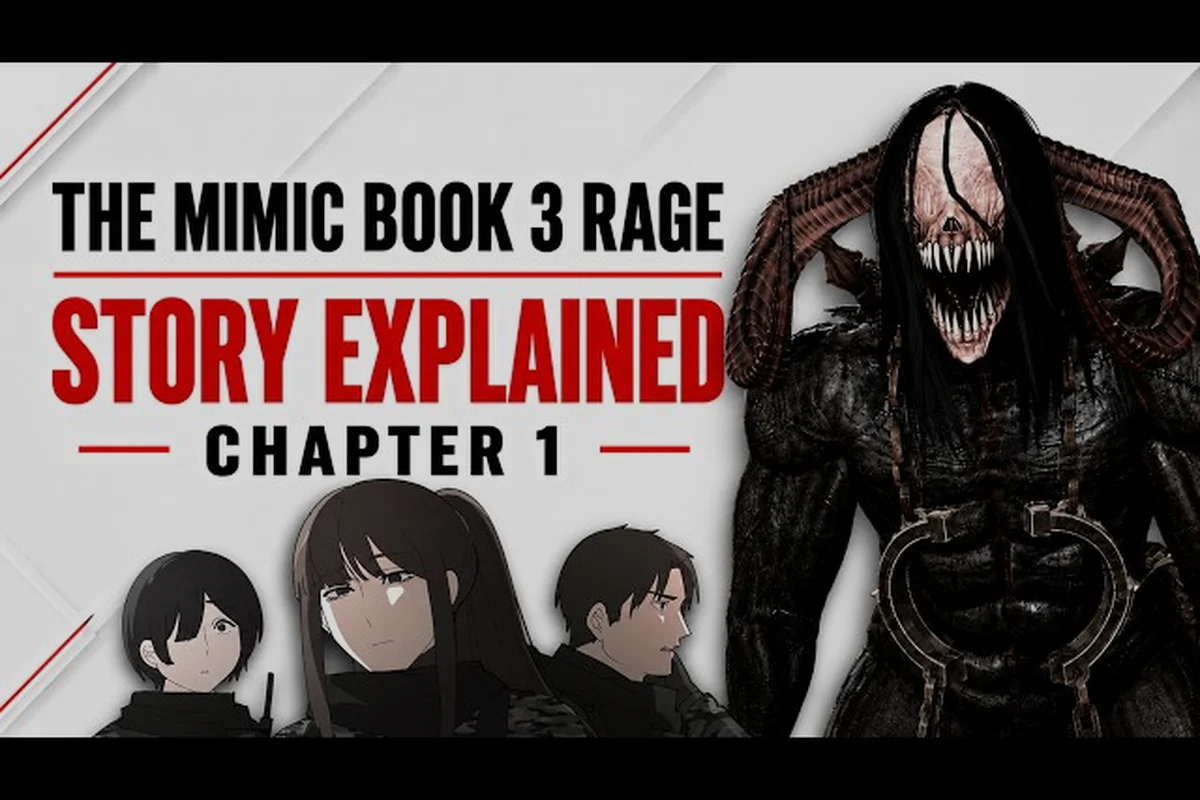
The Mimic lore explained through its four books reveals a story about inherited identities, unstable realities, and people forced to repeat the mistakes of others. This lore guide connects the protagonists, major clues, and shifting copies to explain what the mimics represent and why The Mimic full story feels less like a straight line than a collection of versions.
The Mimic lore guide: four books and a fractured reality
The central idea of The Mimic lore explained is simple: a mimic is not merely a creature that copies a person. It is a living duplicate, and each duplication carries memories, loyalties, grudges, or fears from the source. The story’s four-book structure lets each protagonist inherit the same locations and encounters through a different set of intentions.
That structure matters because no single character can explain the entire mystery. Evidence collected by one protagonist may look harmless until another enters the same place and reveals a contradiction. The books therefore function like overlapping records: each keeps the major events visible while changing their emotional meaning.
| Story layer | What changes between books | What remains consistent |
|---|---|---|
| Protagonist | Identity, relationships, and personal motive | Central locations recur |
| Mimics | Appearance and copied behavior shift | They reproduce recognizable traits |
| Presentation | New clues and dialogue | The same core mystery persists |
| Interpretation | Later books revise earlier assumptions | The source and copy remain linked |
Why the books repeat the same places
Repetition is a narrative device rather than a reset. Returning to a street, household, office, or underground route allows the story to expose how one decision altered another version of reality. A person who appears harmless in one book may be recognized in another, while a useful ally may carry a hostile memory from the source. The four-book overview and recommended reading order helps separate genuine chronological progression from the order in which players encounter the story. Once that distinction is clear, repeated scenes feel purposeful: they function as controlled comparisons between related worlds.
Distinguishing timeline progress from returning atmosphere
Not every returning detail advances the timeline. Some establish atmosphere, while others expose how information has been corrupted, omitted, or interpreted differently. The safest approach is to track three separate layers: observable event, character interpretation, and mimic behavior. For example, if a copy recognizes the same location as its source, that supports continuity; if a character claims a different culprit, that may indicate biased or copied memory; and if a mimic repeats a source character’s habit, the pattern links the two identities without proving they share a fate. This distinction prevents readers from treating dialogue, environmental continuity, and mimic behavior as equivalent proof when reconstructing The Mimic’s origins.
| Evidence type | Example of what to record | Why it matters |
|---|---|---|
| Observable event | A character recognizes a location | Suggests continuity across copies |
| Character statement | Someone claims a motive | May reveal bias or a copied memory |
| Mimic behavior | A duplicate repeats a habit | Connects source and copy |
| Contradiction | Two books assign blame differently | Suggests narrative distortion |
This method keeps interpretation separate from observable evidence, which is crucial when comparing The Mimic’s source characters with their copies. If a protagonist says the copy is innocent while The Mimic’s behavior repeats the original character’s habits, the statement may be unreliable rather than definitive proof. Community discussions often disagree because some readers treat dialogue as fact, while others weigh the observable event or the mimic behavior first; that distinction helps explain conflicting claims about The Mimic’s identities, motives, and origins without treating repeated habits as proof of a shared fate.
The Mimic what are mimics: living copies of identity
The most useful answer to The Mimic what are mimics is that they are physical manifestations of identity. When a person is copied, the result preserves recognizable details—appearance, speech patterns, relationships, and emotional wounds—while creating a being that can diverge through new choices.
That makes every mimic more than a monster encounter. A duplicate can embody affection, resentment, regret, loyalty, or the need for a second chance. The original and its copy are connected, but the copy is not automatically identical in spirit. The source may value a relationship, while the copied version has inherited only the outward sign of it.
The source, the copy, and the bond between them
The source is the person whose identity supplied the pattern. The copy is the created or awakened duplicate. Their bond can operate as recognition, imitation, conflict, or mutual dependence, which makes the same pair produce different outcomes in different books. The source is not automatically innocent because it came first, nor is the copy automatically evil. The books repeatedly place judgment between the two, forcing the player to consider whether an inherited action is still the person’s own responsibility.
| Element | Source | Copy |
|---|---|---|
| Initial identity | Original | Derived from the source |
| Core knowledge | Personal and contextual | Often partial, distorted, or newly organized |
| Motivation | Developed across a life | May repeat or react against the source |
| Relationship | Sets the pattern | Tests whether the pattern can survive independently |
Why copies can differ from their originals
A copy receives the source’s starting conditions, not a guaranteed ending. New environments, relationships, injuries, loyalties, and acts of resistance can push it toward a different personality. This divergence explains why recognizing the original’s face or habits does not necessarily mean predicting the copy’s choices. The guide to Yasu Masashige’s backstory and the role of Hiachi adds useful context for interpreting that distinction. A character’s identity can include inherited memories, while another character may preserve the appearance without preserving the same emotional allegiance.
Reading mimic behavior as dialogue
Mimics communicate through imitation, turning repeated behavior into a form of dialogue. Their copied speech, daily routines, and emotional reactions can reveal what the source person valued, feared, or deliberately concealed. A mimic that repeats an old apology or reenacts a abandoned argument is preserving a script rather than merely becoming hostile. Reading the exact behavior, its trigger, and what has changed in the present scene shows whether the copy is trapped in an inherited role, adapting to new circumstances, or revealing something its source left unsaid.
Useful observations include tracking whether a mimic’s imitation is mechanically triggered or context-sensitive. For example, a dialogue option that revives a copied memory may expose the source’s motives, while a mimic that repeats a warning during a chase may be functioning as an active threat response rather than simple role-play. Comparing its actions with the source person’s established habits helps distinguish inherited identity from deliberate adaptation.
-
Does the copy preserve a routine that the source abandoned?
-
Does it choose the same ally even when that relationship became dangerous?
-
Does it react to a person whom the source never knew?
-
Does it break from the pattern when asked directly about its origin?
This interpretive approach supports the idea that the story is about identity under pressure. A copied person may repeat a role because that is the only identity available, yet it can still become responsible for what it does with that inheritance.
The Mimic mimic origins: inheritance, memory, and transformation
The origin of the mimics is tied to the way identities can be transmitted through memory and symbolic imitation. The story does not present replication as a clean scientific procedure; instead, it resembles a supernatural process in which a person’s image, behavior, and emotional residue can be transferred into another form. This ambiguity is intentional. Inherited resemblance is not identical to transferred memory, and a copied skill is not proof that the copy possesses the source’s entire inner life. Each book adds clues while preserving uncertainty around the precise mechanism.
Clue categories across the books
The lore can be divided into four kinds of evidence: recurring objects, repeated statements, visual parallels, and behavioral changes. Tracking them together is more useful than searching for one decisive answer because each category answers a different question. A photograph or location token can anchor a copied scene to its source; a repeated line of dialogue may reveal a preserved script; matched posture or room layout can expose inherited appearances; and a sudden habit or emotional reflex can signal a mimic’s deeper identity. Reading these clues across both novels and The Mimic game materials can help distinguish surface imitation from changes in memory, history, and selfhood.
| Clue category | What to examine | Likely function |
|---|---|---|
| Repeated object | Location, token, photograph, or keepsake | Anchors a copy to a source |
| Visual parallel | Appearance, posture, or room arrangement | Shows surface inheritance |
| Behavioral echo | Speech, habit, or emotional reflex | Suggests deeper copying |
| Narrative contradiction | Conflicting accounts of an event | Signals altered history or unreliable memory |
A repeated object is not automatically a key to the mystery. A location token or photograph may merely preserve the symbolic connection of the copied world, even when the object’s meaning changes between novels. In The Mimic, that distinction matters because the same keepsake can function as an anchor for a copied scene, a remnant of a mimic’s former identity, or evidence that its history has been rewritten; the clue’s meaning depends on whether it connects the mimic to a source location, to a previous timeline, or to another character’s altered account of events.
Memory, resemblance, and inheritance
The central ambiguity lies in the difference among three layers. Resemblance concerns outward appearance: a mimic can reproduce a face, voice, or body language, but may fail to preserve the original’s motives. Memory concerns remembered events and their emotional significance, allowing a copy to react with habitual fear, trust, or resentment even when its chronology is incomplete. Inheritance describes what a copy actually carries forward, including traits, loyalties, grudges, and the capacity to make a final choice beyond the template it copied.
| Layer | Can transfer | Can change |
|---|---|---|
| Resemblance | Face, voice, body language | Appearance, presentation, mannerisms |
| Memory | Fragments, habits, emotional reactions | Names, chronology, certainty |
| Inheritance | Traits, loyalties, resentments | Values, relationships, final choices |
This framework explains why the same copied person can frighten a protagonist who recognizes a kind gesture that was once sincere. The gesture remains, but the relationship around it has been transformed: resemblance preserves the outward sign of affection, while memory may preserve the protagonist’s gratitude or fear attached to that sign. Inheritance, however, can carry forward a different loyalty or resentment, meaning the copied person may repeat the kindness without inheriting the original’s intent or moral claim. The terror therefore comes from a mismatch between the familiar gesture and the copy’s altered relationship to it, not necessarily from any visible change in the gesture itself.
Where the origin mystery remains uncertain
The books point toward an origin involving copied identity, but they do not give every reader the same level of certainty. Questions about the first mimic, the original event, or the purpose of the process remain major subjects of community analysis. Reports from players often disagree because they treat visual parallels, dialogue, and chronology as equally reliable evidence.
The most responsible interpretation separates confirmed patterns from interpretation. The game confirms that copies carry recognizable traits and can enter intimate relationships with their sources. It does not make every fan theory equally certain. When evaluating a proposed solution, check which text, object, or behavior supports it.
The Mimic story timeline: four protagonists, recurring conflicts
The clearest way to understand The Mimic story timeline is as four narrative passes over a shared pattern. The books revisit key situations, but each protagonist arrives with different relationships, knowledge, and reasons for acting. Their decisions create parallel outcomes rather than a single uninterrupted chronology.
Comparing every scene therefore does not necessarily reveal a continuity error: the differences may mark deliberate continuity between books, or they may come from a changed copy, a different witness, or information that was unavailable earlier. For example, the same Mimic encounter can appear with a different survivor identity or motive without contradicting the broader timeline, because each narrative pass filters the shared pattern through another protagonist’s knowledge. Treating those variations as contradictions would confuse changing perspectives with retcons.
A framework for the four-book sequence
| Book stage | Narrative focus | Main interpretive task |
|---|---|---|
| First book | Establish the protagonist and central threat | Learn how copies behave |
| Second book | Recontextualize earlier events | Compare altered motives |
| Third book | Expose deeper connections | Trace the source-and-copy pattern |
| Fourth book | Integrate the major clues | Decide what the pattern means |
| Aftermath | Revisit consequences and ambiguity | Separate confirmed facts from theories |
The four books should be read as four lenses on one damaged chain of events. New information does not merely add lore; it changes how earlier scenes should be interpreted. For example, if the second book reveals that a copy reproduced an action without understanding its motive, the first book’s apparent betrayal may instead point to mimic behavior, while the third book’s source-and-copy pattern can expose which identities were replaced. The fourth book then tests that reinterpretation against the major clues, leaving the aftermath to distinguish the Mimic’s confirmed operations from explanations that remain theories.
Why chronology sometimes contradicts itself
A copied reality can preserve an event while changing who caused it, how it was experienced, or what followed. The timeline therefore has two dimensions: the order in which books are released and the order of events within each version.
A useful tracking method is to maintain separate columns for release order and in-world chronology, since a later book may preserve the same hand-related clue while altering its cause, interpretation, or consequences. For example, an event recorded in the first book can remain the fixed point, while the Mimic’s identity, the reliability of the narrator, and the meaning of the recurring clues are revised in later versions; this prevents a retrospective reveal from being mistaken for information available to the first protagonist. The timeline of events and recurring hand-related clues offers a more chronological way to organize those notes. It is particularly helpful for preventing late revelations from being mistaken for facts that the first protagonist already knew.
-
Mark the event as it appears in the first book.
-
Record the first fact that complicates it.
-
Compare the changed detail in each later book.
-
Label each conclusion as confirmed, implied, or speculative.
Character knowledge is part of the timeline
The narrator’s perspective can be limited by fear, guilt, misunderstanding, or a copied memory. As a result, “when” a fact entered the story may differ from “when” the character learned it. This distinction helps explain contradictory testimony: two accounts can disagree even when both are sincere.
The result is a story timeline with two simultaneous orders: the physical sequence of events and the sequence in which characters acquire evidence. Tracking both prevents the player from blaming a protagonist for not acting on information that the narrative has not yet revealed.
The Mimic full story: contradictions, identities, and the final synthesis
A complete reading of The Mimic full story reveals that the central conflict is not simply humans versus monsters. It is a struggle over who determines the meaning of an identity. Original people fear being replaced; copies may cling to the identities assigned to them; loved ones struggle to separate the source from the resemblance.
By the fourth book, the lore’s recurring relationships and locations form a deliberate chain: copies repeat gestures, settings, and forms associated with people they replace, so each new encounter both resembles an earlier scene and complicates it. A changed room, an inherited name, or a familiar face can reveal how the mimic cycle operates without resolving every contradiction. This final synthesis therefore gives players enough evidence to recognize the cycle of copying and its emotional consequences while preserving the uncertainty at the heart of The Mimic’s identities.
Themes that connect the books
| Theme | Surface expression | Deeper meaning |
|---|---|---|
| Recognition | Copies resemble people | Identity persists beyond appearance |
| Repetition | Scenes return with changes | History can be inherited and altered |
| Responsibility | Characters react to copies | The past shapes but does not determine every choice |
| Memory | Evidence conflicts between books | Truth depends on both content and perspective |
| Belonging | Copies seek roles and relationships | A copied identity can still become real |
The recurring pattern suggests that a copy’s similarity to its source creates emotional leverage. The source may see a second chance, a threat, or evidence that the past cannot remain buried. Meanwhile, the copy’s reactions show that inherited identity can carry expectations that no one chose.
How each ending changes the reading
Different endings reshape the meaning of the same relationships because they change which loyalties survive, which characters retain agency, and whether the pattern is interrupted or continued. Instead of treating an ending as a separate puzzle, compare it with earlier books and ask which earlier scene now looks like foreshadowing.
The strongest clue is often behavioral. If a character makes a choice that seems unlike the version established in an earlier book, examine what they copied, whom they trust, and which fear shaped the decision. This is more reliable than assuming that a changed appearance always indicates a changed soul.
The final synthesis
The lore points to mimics as beings shaped by inherited identity: they preserve recognizable aspects of a person while acquiring a new place in the world. Their stories expose the danger of reducing a person to a surface pattern, and the difficulty of separating memory from responsibility.
That conclusion also explains why the four-book structure matters. Each book tests the same relationships under different conditions, gradually revealing that resemblance is only the first clue. The real question is what a copy chooses when the source’s life no longer dictates every answer.
Frequently Asked Questions
Are The Mimic mimics copies of real people?
Yes. The mimics preserve recognizable aspects of a source person, including appearance, speech, habits, relationships, and emotional reactions. However, a copied identity is not an exact duplicate: the copy can develop new loyalties, reinterpret memories, and make choices that diverge from the original.
Does The Mimic lore explained include one continuous timeline?
Not exactly. The four books revisit related events from different perspectives, and some details change between versions. The story timeline is therefore best understood as a set of overlapping continuities shaped by different protagonists, copied identities, and levels of character knowledge.
Why do the same characters and locations return in every book?
Repetition lets the player compare versions directly. Returning characters and locations reveal how altered motives, relationships, or mimic behavior can transform the meaning of an earlier encounter. The pattern also builds evidence for the larger cycle of copying and identity transfer.
Are the different endings evidence of separate realities?
The endings can be read as distinct outcomes produced by changing loyalties and decisions within the broader copied-reality framework. They preserve several recurring relationships while changing their final direction, which makes each ending a test of whether characters can resist repeating inherited patterns.
What is the most reliable clue to a mimic’s origin?
Behavioral and visual parallels are more reliable than a single object or statement. Look for repeated speech patterns, habits, emotional reactions, and relationships. Contradictions between books can identify altered history, but they do not automatically prove that one version is objectively true.