
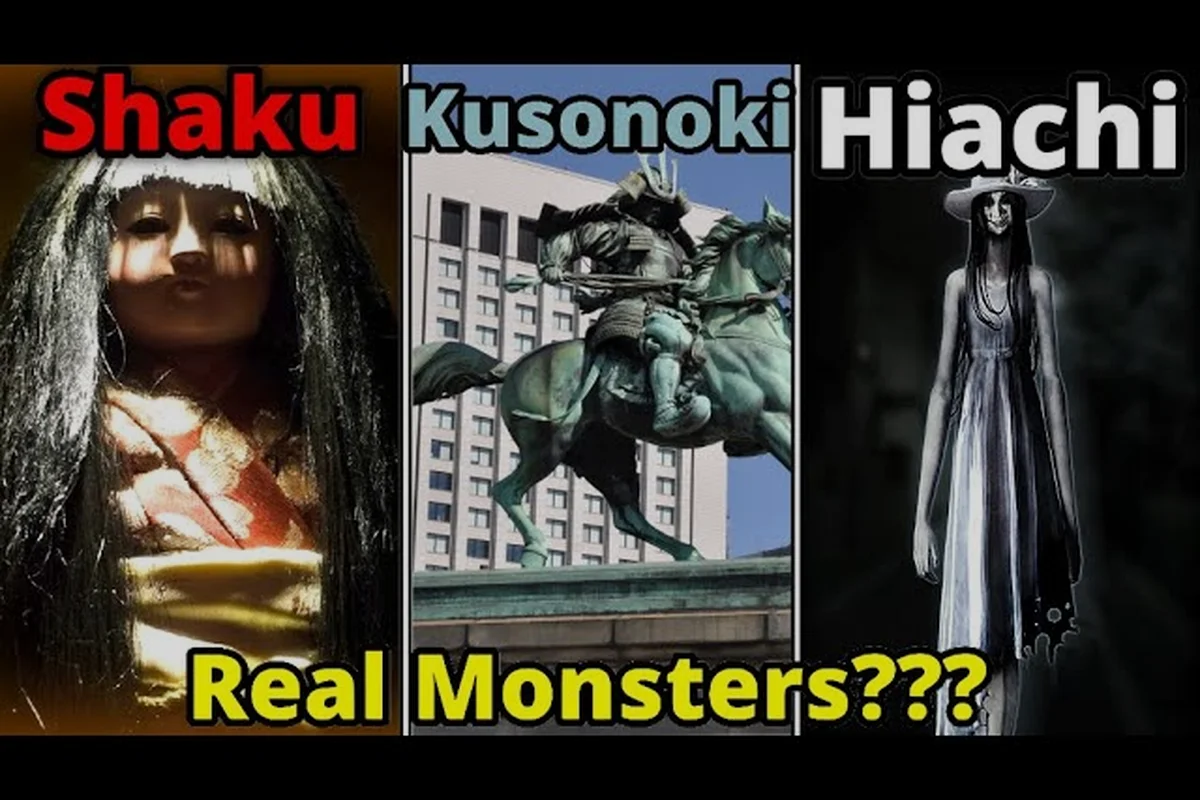
The Mimic monster lore connections point to a shared curse affecting beasts, spirits, and haunted locations, but each chapter expresses that link differently. Tracking the Hands, Omukade, Kintoru, and the Skull Maze reveals how entity behavior and environmental threats reinforce one another, while also clarifying practical details such as how to avoid the Hands and which weaknesses can be exploited when The Mimic appears.
The Mimic monster lore connections: a unified curse
The most important idea behind The Mimic monster lore connections is that the creatures are not isolated enemies. They appear to be different expressions of the same supernatural force, with each chapter adding a new image, behavior, or location to the mythology. That makes the monsters feel less like disposable obstacles and more like pieces of a larger story.
The Hands, Omukade, the four beasts, and the ghostly yūrei imagery form the clearest recurring network. A player who tracks where these entities appear can also infer how the game’s locations reinforce its atmosphere: corridors become hunting grounds, masks become warnings, and empty rooms may be more dangerous than visible monsters.
| Lore element | Primary chapter association | What it contributes | Key connection |
|---|---|---|---|
| The Hands | Early encounters and recurring pursuit sequences | Physical pursuit and direct danger | They embody the curse’s active, grasping side |
| Omukade | Later supernatural escalation | A more ominous and culturally specific entity | It expands the threat beyond a simple creature |
| Four beasts | Multiple chapter encounters | Animal-like manifestations of the curse | Their behaviors provide distinct mechanical and narrative clues |
| Yūrei imagery | Ghostly scenes and supernatural apparitions | Death, possession, and memory | It links physical monsters with the afterlife |
| Skull Maze | Later exploration and confrontation space | A concentrated setting for revelation | The place gathers earlier motifs into a denser mystery |
| Kintoru | A lore-linked entity or figure | Historical and symbolic context | It suggests the curse has roots beyond one haunted building |
This framework makes The Mimic entities intelligible without treating every apparition as the same enemy. The Hands embody active pursuit, Omukade signals a supernatural escalation, the four beasts externalize the curse through animal behavior, and yūrei imagery connects possession with death and memory. By contrast, the Skull Maze concentrates those motifs into a revelation space, while Kintoru suggests the curse may predate the chapters centered on the haunted building.
The Hands as the active curse
The Hands are the clearest example of the curse becoming physically aggressive. Their grasping behavior turns the environment into a threat because danger can come from walls, corners, or confined spaces rather than from a visible creature walking toward the player. This makes The Mimic how to avoid the hands question less about memorizing one counter and more about reading spaces correctly.
The hands also establish a recurring principle: the monster’s danger is intensified when the player has limited room to maneuver. Narrow corridors, blind corners, and doorways create natural ambush points, while open areas give the player more time to hear, observe, and change direction.
Omukade and the shift toward possession
Omukade changes the tone of the supernatural threat. Unlike a creature that primarily pursues the player, the idea of possession suggests that the curse can enter a person’s identity or behavior. That distinction makes the monster more unsettling because the player can no longer assume that every visible figure is trustworthy.
The lore connection is especially strong when Omukade appears alongside masks or ghostly figures. A mask can conceal identity, while a yūrei-like presence can imitate a person who is no longer fully present. These images overlap in a story about unstable identity, which explains why the game’s most disturbing encounters often feel personal rather than random.
The Mimic entities by chapter: how the story expands
The Mimic entities by chapter form a progression from immediate physical danger to deeper supernatural and historical questions. Early encounters establish that the game’s locations are active and dangerous. Later chapters complicate the source of that danger by adding spirits, altered identities, and historical references such as Kintoru.
Because the dependency material does not provide a verified chapter-by-chapter roster, the safest interpretation is thematic rather than a fabricated list of debut levels. Players should treat the following map as a lore-reading framework, then confirm specific appearances against the chapter walkthrough for the game’s current chapter order.
| Lore phase | Entity group or motif | Likely narrative role | Evidence pattern |
|---|---|---|---|
| Opening phase | The Hands | Establish direct pursuit | Physical attacks and environmental ambushes |
| Early escalation | Beast forms | Broaden the curse beyond humanlike figures | Different silhouettes and attack rhythms |
| Middle chapters | Ghostly and yūrei imagery | Introduce death, possession, and memory | Apparitions, masks, and altered identities |
| Omukade phase | Omukade and associated spirits | Recast the threat as something that can inhabit or deceive | Possession cues and supernatural scenes |
| Later lore | Kintoru | Connect local horror to history or symbolism | Historical clues and deliberate references |
| Skull Maze climax | Skull Maze threats and revelations | Concentrate the established motifs | Multiple entities or images converging in one space |
This phased reading avoids treating the story as a flat catalogue. Each group changes what survival means, and the entities also function differently inside The Mimic monster weakness analysis. A hand that catches you from an opening is an immediate mechanical problem; Omukade is a narrative and psychological problem; the Skull Maze turns both into a combined test of observation and route planning.
Early chapters establish the physical rules
The early chapters are important because they teach the player which visual signals belong to the curse. A shadow that moves incorrectly, a hand attached to an ordinary surface, or a creature that repeats a familiar attack can all become evidence when comparing later encounters. The point is not to label every moving object as a monster; it is to learn which patterns recur.
That learning process matters because survival depends on attention. A player who understands the rhythm of The Hands can pause before entering a hazardous doorway, while a player who ignores the pattern may treat a familiar cue as ordinary background detail.
Later chapters complicate identity
Yūrei imagery changes the emotional stakes. A visible pursuer can be avoided, but a figure that resembles a colleague or a former self demands interpretation. The monster no longer only occupies the maze; it contaminates the meaning of the space and the identity of the people inside it.
Player reports often focus on mask details, altered voices, and figures that appear in reflective or distant spaces. Those observations should be treated as community-reported clues, because individual scenes can vary by version or difficulty. Even without confirming every detail, the pattern supports the broader link between Omukade, yūrei imagery, and the theme of possession.
The Skull Maze gathers the mythology
The Skull Maze is significant because it functions like a concentrated map of the game’s imagery. Bone-like architecture, narrow routes, ghostly presences, and predatory encounters make the location feel less like a conventional maze and more like a memorial corrupted into a hunting ground.
The timeline of events can help place this concentration within the larger narrative sequence. Comparing when the Hands, Omukade, and Kintoru become important reveals whether the story presents one force evolving through different forms or several powers drawn together by a common calamity.
The Mimic monster weakness: what each connection reveals
The Mimic monster weakness is not limited to a single attack type. Effective avoidance depends on matching the correct response to the entity’s lore function. Physical threats demand spacing and timing; possession threats demand verification and observation; environmental threats demand route awareness.
| Entity or motif | Main danger | Useful countermeasure | What the lore adds |
|---|---|---|---|
| The Hands | Sudden capture from a blind side | Clear corners, open approach angles, and quick retreat | Confirms the curse reacts through physical space |
| Four beasts | Different pursuit and attack patterns | Observe movement before committing to a route | Each beast distinguishes one behavior family |
| Yūrei imagery | False identity or presence | Check contextual details rather than trusting appearance | The threat attacks perception |
| Omukade | Possession or imitation | Maintain distance and verify unusual behavior | Connects masks and supernatural identity |
| Kintoru | Symbolic or historical influence | Track lore clues and environmental changes | Deepens the cause behind the curse |
| Skull Maze threats | Overlapping hazards in confined space | Map entrances, exits, and safe turns | Compresses every earlier warning into one route |
The crucial distinction is between avoidance and defeat. Many players can survive an encounter by escaping its attack pattern, but understanding the lore can reveal why the encounter is arranged that way. The Hands punish tunnel vision, beast encounters reward adaptation, and yūrei-like scenes punish automatic trust.
Exploit the entity’s design
The most reliable weakness is behavioral. The Hands need a reachable opening, while beast encounters depend on recognizable movement. If the monster is already moving toward the player, there may be little time to react; if its body is partly concealed, the greater mistake is walking directly into its attack zone.
This gives the player a practical sequence for exploiting Mimic entities: first confirm whether the threat is the Hands or a beast, then use its visible behavior to create distance. For example, if a creature only attacks after the player crosses a threshold, retreat to the previous room and watch which movement triggers it; if the Hands emerge near a doorway, bait the opening from a reachable side rather than entering blindly. Identifying the entity this way preserves information about its chapter-specific pattern, making later encounters easier to survive.
-
Stop before blind corners. Listen for movement and identify whether the surface, doorway, or reflection is wrong.
-
Keep one escape route. Do not enter a dead-end corridor until the entrance remains visible or reachable.
-
Observe before fighting. A creature that pauses, turns late, or repeats a route is revealing a repeatable behavior.
-
Treat identity as unverified. If a figure behaves strangely during an Omukade-related sequence, assume the anomaly matters rather than dismissing it.
-
Change routes after a warning. The curse is associated with patterned spaces, so repeating the same path after a close encounter can invite another attack.
These habits are more dependable than memorizing a single universal trick, since they remain useful even when the player does not know exactly which entity is present. For instance, in the Kintoru-related encounters, a suspicious reflection may initially resemble the Hands, but its delay, attack range, and route can still reveal a chapter-specific Mimic pattern. Combining one confirmed behavior with the escape-route rule lets the player test the anomaly safely; if the figure reacts to movement rather than proximity, the next attempt can trigger the same sequence without requiring a dangerous frontal engagement.
Avoid The Hands by controlling sightlines
The Mimic how to avoid the hands depends on understanding where control is possible. The hands punish a player who enters a hazard without checking the geometry of the room. A wide doorway may expose them to a grab from one side, while a cramped corner can hide the entire approach.
The best response is to move deliberately rather than sprinting through every opening. Peek around angles, watch reflections where available, and back away if the attack animation begins. More general survival advice is covered in the guide to avoiding monsters, which is especially helpful for players still learning how threats interact with corridors.
Treat perception as part of combat
Yūrei and Omukade imagery adds another layer: the player may need to resist the urge to identify a familiar figure immediately. A ghost that seems harmless can still be dangerous if the scene is designed to test recognition. Conversely, an aggressive animal may simply be acting on instinct rather than carrying the same supernatural intelligence as a possessing spirit.
That distinction makes careful observation more valuable than blanket distrust. Confirm details such as clothing, posture, direction of movement, and whether the figure reacts consistently. The mask motif is especially important because masks indicate role, restraint, and concealed identity throughout the game’s visual language.
The Mimic Kintoru and the deeper historical thread
The Mimic Kintoru reference is one of the strongest reasons to examine the lore beyond the monster roster. Kintoru suggests a named historical or symbolic presence, while The Hands and beast forms belong to the immediate experience of pursuit. Bringing those categories together creates a possible progression from local folklore to a deeper origin.
Because no verified web source is supplied for Kintoru’s biography or an explicit canonical diagram, the article should avoid presenting speculation as settled fact. The safest reading is that Kintoru connects the game’s Japanese horror imagery to the curse’s historical layer. Community observations can help players locate the connection, but the name should be interpreted through in-game evidence rather than assumed to represent one confirmed identity.
| Evidence type | What it can establish | What it cannot establish alone |
|---|---|---|
| Dialogue or documents | A stated relationship to a person, event, or entity | The complete chronology |
| Visual design | Shared masks, beasts, skulls, or hands | Whether every symbol refers to the same being |
| Encounter behavior | Whether an entity follows the curse’s rules | Its identity beyond what the scene demonstrates |
| Kintoru references | A historical or symbolic layer | Whether Kintoru is an ally, victim, source, or vessel |
| Chapter placement | How the story introduces and develops the thread | The final answer unless corroborated elsewhere |
This evidence-based approach is important because horror lore often invites disagreement. One scene may suggest that a creature is a transformed person, while another may frame it as an independent spirit. The connections are still meaningful, but the safest conclusion is that the same curse can manifest through different origins without erasing the identity of each form.
From physical horror to historical horror
The Hands make the curse tactile and immediate. The four beasts make it primal and animalistic. Yūrei imagery makes it spectral, while Omukade makes it invasive. Kintoru potentially places it in a historical framework, suggesting that the characters trapped in these events are caught between physical danger, inherited tradition, and the past itself.
That progression is why the Skull Maze works as a lore destination as well as a difficult environment. Its imagery can be read as a convergence point: skulls echo death, narrow passages recall the Hands, spectral figures suggest yūrei, and masks or beasts complete the visual vocabulary of the curse.
The Mimic entities: comparing the complete lore network
A useful comparison should separate what the entities share from what makes each distinct. The Mimic entities are linked by recurring visual and narrative language, but they occupy different functional roles. This prevents the lore analysis from collapsing everything into a single monster with alternate skins.
| Entity group | Physical form | Story function | Combat relationship | Strongest clue |
|---|---|---|---|---|
| The Hands | Grasping limbs | The curse’s direct reach | Close-range capture | Attacks emerge from environmental edges |
| Four beasts | Animal forms | Natural and predatory instincts | Pursuit and pattern-based attacks | Each beast has a distinct silhouette and behavior |
| Yūrei figures | Spectral human-like forms | Memory, death, and haunting | Deception, fear, and identity confusion | Figure behavior conflicts with context |
| Omukade | Masked or possessing presence | The curse’s invasive intelligence | Unpredictable and psychologically unsettling | Appearance and identity become unstable |
| Kintoru | Historical or symbolic presence | A possible origin tied to the past | Often interpretive rather than a simple duel | Name and references connect separate chapters |
| Skull Maze phenomena | Environmental composites | Convergence of the whole mythology | Layered threats in constrained spaces | Several motifs coexist in one location |
This network also clarifies why The Mimic monster lore connections matter for difficulty. A player may overcome the first four beasts through observation, but the later lore asks the player to interpret warning signs that are not purely physical. Knowledge becomes a defensive tool because recognizing an entity’s category tells the player what kind of mistake to avoid.
Shared symbols, different meanings
Hands signify seizure, beasts signify predation, ghosts signify unresolved death, masks signify concealed identity, and skulls signify mortality. The Skull Maze name combines the last two ideas into a physical environment. When these symbols appear together, they can suggest that the curse does not merely kill; it traps, transforms, and repeats identities.
That interpretation remains a thematic synthesis rather than a confirmed developer statement. It is nevertheless more useful than treating each monster as a random challenge, because it creates predictions. If a new encounter uses a mask, possession imagery should be considered. If it relies on skull motifs, identity and death may be central. If the threat comes from a beast, attention to movement may reveal its pattern.
Entity-form notes for separating Mimics from set dressing
When investigating an unclear scene, players can record several details to separate a genuine Mimic entity from an ordinary environmental effect. Note the chapter, the specific room or transition, and what changed immediately before the sighting; for example, a hand emerging during a corridor chase carries more significance if it repeats the same grasping behavior seen during the Skull Maze sequence. Comparing those observations with The Mimic entities by chapter helps identify whether the creature is escalating its identity-based behavior, while also revealing whether the apparent Mimic is actually a trap or environmental animation rather than a new lore connection.
-
Entity form: hand, beast, ghost, masked figure, or composite phenomenon.
-
Behavior: Does it pursue directly, imitate, remain still, attack the environment, or react to identity?
-
Location: Is it associated with corridors, a ritual-like room, a reflective space, or the Skull Maze?
-
Symbols: Are masks, skulls, paper, shadows, or corpse-like forms present?
-
Timing: Does the appearance follow a chapter progression or disrupt the expected order?
-
Outcome: Does the encounter produce escape, capture, transformation, or a lore clue?
This method turns observations into a repeatable process for tracing The Mimic monster lore connections. For example, a hand that escapes during the Skull Maze sequence should be logged separately from a masked figure appearing in a reflective room, since the former confirms a recurring entity while the latter may only suggest imitation or environmental misdirection. Matching each entry against The Mimic entities by chapter also exposes repeated patterns: identical grasping behavior can support a deliberate reappearance, whereas a changed attack pattern may indicate a trap, a transformation, or merely a scenery-based decoy rather than a new connection to The Mimic monster lore.
Frequently Asked Questions
What connects The Mimic monster lore connections across chapters?
The recurring curse links physical monsters, ghostly apparitions, masks, and haunted locations through three recurring functions: pursuit, imitation, and displacement of identity. The Hands and four beasts externalize the curse as bodily threats, while yūrei apparitions and Omukade make familiar figures unreliable. Kintoru and the Skull Maze connect that same pattern to buried history and ritual symbolism, suggesting that the entities are not isolated enemies but different expressions of one inherited supernatural system.
Are the four beasts connected to The Mimic entities?
Community observations suggest the beasts belong to the same broader supernatural network, although each has a distinct silhouette and attack pattern. Their shared function is to express predatory or instinctual behavior, while the Hands remain associated with grasping and environmental pursuit.
What is the best weakness for the monsters in The Mimic?
No single weakness covers every The Mimic entity. The Hands can be managed with spacing, controlled retreats, and route planning, but yūrei apparitions and Omukade require different responses because their deception targets recognition and trust. A familiar voice or face should not automatically be treated as safe; confirm suspicious figures against the chapter’s environmental cues before approaching, since accepting an imitation can displace a player’s identity and turn the encounter into a pursuit.
How can players avoid The Hands in dangerous corridors?
Move slowly around blind corners, keep an escape route open, and watch for movement near doors, walls, and floor-level openings. If a grab begins, retreat immediately rather than trying to fight through the animation, and change routes after a close encounter.
What does Kintoru add to the game’s monster mythology?
Kintoru appears to add a historical or symbolic layer beyond the immediate monsters. Its references help connect the curse with inherited Japanese horror imagery, but players should distinguish confirmed clues from interpretation and use in-game documents and dialogue as the basis for conclusions.