
The Mimic monsters list matters because recognizing each entity changes how you read a room, fight, or interact. This guide organizes The Mimic all monsters by book and behavior, including recurring threats, distinctive creatures, and friendly figures. Each entry highlights the differences between mimic creatures: whether an enemy imitates furniture, assumes a humanoid disguise, attacks on contact, or behaves as an ally. That classification makes it easier to identify threats such as the Mimic chest and other dungeon hazards before they close the distance, while also separating harmless imitations from entities that can be spoken to or recruited.
The Mimic monsters list by book and entity type
The creatures in The Mimic are not merely repeated combat obstacles. Some appear in one story segment, others return with changed behavior, and several benign characters can be mistaken for enemies. A useful The Mimic monsters explained reference therefore needs more than names: it should show where each entity appears, how it behaves, and what the player should do when it enters the scene.
The categories below follow the game's narrative structure. The four-book organization also helps explain why an enemy may feel familiar in a later chapter; for a broader view of the order of events, consult The Mimic book sequence guide. This inventory groups creatures by their most useful field role rather than pretending that every entity receives identical screen time.
| Entity group | Main threat | Behavior pattern | Practical response |
|---|---|---|---|
| Recurring Hands | High and unpredictable | Pursue, grab, and interfere | Break line of sight and avoid open ground |
| Book-specific creatures | Varies by encounter | Chase, ambush, patrol, or attack directly | Learn the visible cue before committing |
| Mimic creatures | High deception | Hide their identity or resemble ordinary objects | Inspect suspicious forms before touching them |
| Friendly figures | None by default | Assist, converse, or occupy the scene | Identify them before drawing a weapon |
| Human attackers | Medium to high | Use predictable weapons and coordinated pressure | Control distance and interrupt attacks |
Recurring entities and persistent threats
The Hands are the clearest recurring danger in the roster. Their value comes from persistence rather than elaborate movesets: they enter dangerous spaces, pursue the player, and can turn an otherwise manageable encounter into a race against multiple threats. Their danger increases when the player carries out an objective in the open because there is little room to redirect them without sacrificing time.
Treat Hand pursuit pressure as a separate planning layer, not simply another enemy attack. If the current objective is a collectible or interaction, route around the Hands rather than trying to defeat everything immediately. When they appear beside a stronger creature, the player may need to create space instead of exchanging damage, especially if sound or movement draws attention from both groups.
Friendly and neutral figures
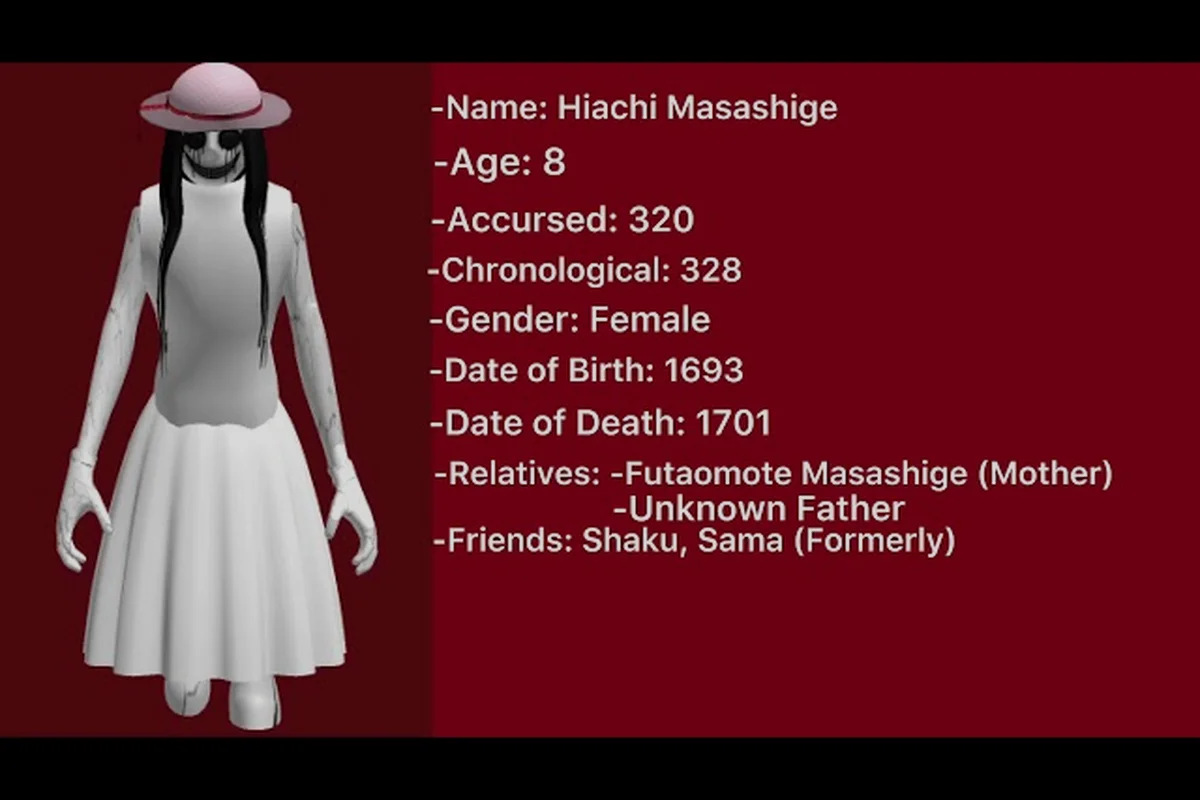
Friendly figures are easy to overlook in a list organized only around combat. Hiachi is one example of a character who should not be treated as a hostile monster. Such figures may have their own visual language, movement patterns, or dialogue, which makes them valuable for distinguishing allies from enemies in uncertain scenes.
Recognition prevents both forms of error: attacking someone harmless and assuming every unusual figure is a threat. Before entering a new location, compare the person's silhouette and movement with what the current chapter has established. The The Mimic locations list can help readers connect likely encounters with their surroundings, while careful observation reveals whether a figure behaves aggressively, defensively, or neutrally.
How the monsters guide defines a hostile entity
The Mimic monsters guide should distinguish hostile entities from monsters in the broad narrative sense. A mimic creature may imitate an object, a person, or part of the environment, so its danger lies in delayed recognition. The Hands behave more directly, while hostile humans can communicate through weapon preparation, pursuit, and attacks.
These categories separate entities by how they expose threat rather than by appearance alone, which matters because a mimic can resemble a harmless prop until interaction triggers its attack. For example, an object that follows a player after being picked up or a figure whose posture changes before an attack should be treated as deceptive, while a plainly visible creature advancing without concealment falls under direct aggression. Keeping these distinctions clear helps players identify a target before committing to combat or investigation.
-
Direct attackers announce danger through pursuit or a wind-up.
-
Deceptive creatures reward inspection and restraint.
-
Noncombat characters use movement, position, and dialogue as identifying clues.
Because naming conventions can differ between community guides and the game's own presentation, this reference emphasizes observable behavior. That makes the list more reliable during play, when a dangerous figure is moving and a mistaken identification can cost a run.
The Mimic monsters explained through behavior
A creature's behavior is often more useful than its name. The all-monsters view becomes easier to remember when each enemy is attached to a rule: watch the hands, clear the space, break the disguise, or keep moving. These rules also transfer between encounters, which helps when one monster appears alongside another.
Reading pursuit, ambush, and interception
Pursuit behavior is easy to recognize because the entity closes distance and keeps pressure on the player's current position. Ambush behavior depends on hidden placement, so the important clue may be an environmental change such as a moving object, an unusual sound, or a figure that appears only after the player enters a trigger area. Interception is different again because the creature tries to block a route instead of simply following behind.
| Observable behavior | Likely entity category | Why it matters | Best response |
|---|---|---|---|
| Follows directly and maintains pressure | Pursuer | Creates a race against the objective | Move while creating distance |
| Waits near a path or doorway | Ambusher | Punishes a predictable route | Check corners and alternate paths |
| Returns to guard an area | Sentinel or returning entity | Can reappear after being avoided | Mark its position and choose another route |
| Mimics an ordinary object | Deceptive mimic | Encourages unsafe interaction | Inspect shape, sound, and motion |
| Moves near an ally without aggression | Friendly figure | Prevents accidental attacks | Watch behavior and allow dialogue |
The practical value of The Mimic entities explained this way is immediate: each observation points toward a response. Do not spend every item or ability trying to remove a pursuer when escaping would preserve resources for the objective. Do not ignore an environmental anomaly because the area seems empty. And do not use a permanent combat response on a figure whose behavior remains nonhostile.
Why disguise changes threat priority
A deceptive creature turns observation into a defense. Normal enemies may be detected through their approach, but an imitation can remain still until the player commits. The safest routine is to look for a mismatch between appearance and movement. A supposedly harmless shape may shift at the wrong moment, occupy a position no object should hold, or react to nearby events that should have no effect on it.
Disguise confirmation is the key check. If a form reacts like the player, blocks a path, or changes position without a clear cause, treat it as hostile even before a fight begins. This habit is more reliable than memorizing every visual detail because different encounters may emphasize different cues.
The Mimic enemy guide for difficult encounters
Multiple entities are more dangerous than one individually. The Hands create pressure, a mimic punishes inattentive movement, and a direct attacker forces the player to stop and fight. The strongest response is to decide which threat must be handled first rather than swinging at everything within reach.
Establish the priority order
Use a simple priority order based on immediate danger and objective value: first identify entities that can end the current encounter or lock the route, then compare each threat with the mission step it threatens. For example, an imitation Mimic near an objective outranks a distant direct attacker, while Hands closing in during a corridor may outrank both because contact restricts movement and interrupts escape. This ordering keeps decisions tied to the The Mimic monsters list instead of treating every creature as an equally urgent target.
-
Escape threats are first when they block a safe route or prevent completion.
-
Deceptive threats are second because contact may trigger a dangerous fight.
-
Direct attackers are third if they can be avoided without losing the objective.
-
Persistent threats are handled last unless their attacks are impossible to ignore.
This order changes in narrow corridors, where the Hands may be more dangerous than a stationary creature, and in open arenas, where a fast direct attacker may dominate. The goal is not to avoid every battle; it is to ensure each engagement happens on terms that favor the player.
| Encounter situation | Highest priority | Secondary priority | Best practical choice |
|---|---|---|---|
| Open field plus pursuing entity | Keep moving | Control stamina | Create distance and reach the objective |
| Narrow corridor plus Hands | Clear escape path | Identify nearby decoys | Break contact instead of fighting in place |
| Suspicious object near the objective | Inspect the imitation | Guard the exit | Confirm identity before interacting |
| Direct attacker blocks the route | Interrupt or evade | Deal with nearby threats | Use terrain and attack windows |
| Ally and enemy look similar | Observe behavior | Use dialogue or positioning | Avoid attacking until identity is clear |
Objective preservation should guide aggressive fights. If an enemy does not stop completion, leaving it alive may be better than wasting all healing items. The Mimic enemy guide should therefore measure success by objective completion and remaining resources, not by the number of creatures defeated.
Manage attention instead of health alone
Health is only one resource. Stamina, usable items, time, and positioning determine whether the player can finish the current objective. Chasing an enemy across a room can consume more stamina than the fight itself, especially when the route brings the player back toward a group of Hands.
Use short routes and test surfaces of the floor. Fight only when the surrounding space gives you a retreat. This approach is especially effective when one hostile type attacks from the front while another interferes from behind. The enemy's location, not merely its health bar, determines whether the encounter is safe to finish.
The Mimic monsters guide for preparation and recognition
Preparation does not require memorizing a long codex. It requires pairing each important creature with a visual cue, a likely location, and a response. That turns The Mimic all monsters into a practical reference for both first-time players and experienced players who want a faster chapter loop.
Build a personal recognition checklist
A short checklist is more useful than vague familiarity. Note the silhouette, movement, sound, and trigger behavior of each monster you meet. Also record whether it is hostile, deceptive, neutral, or helpful. This distinction matters because a visually striking creature can be harmless while an ordinary-looking figure can be lethal.
For each chapter, review only the creatures expected there. The chapter walkthrough and book order reference can provide a more useful progression context than repeatedly fighting an enemy that does not belong in the current section.
| Preparation field | What to record | Example use |
|---|---|---|
| Silhouette | Overall shape or posture | Spot it at the edge of vision |
| Movement | Walking, crawling, rushing, or reaching | Judge intent before contact |
| Trigger | Sound, proximity, object, or interaction | Avoid accidental encounters |
| Entity class | Hostile, deceptive, neutral, or friendly | Choose the correct response |
| Objective impact | Blocks access, harms the player, or does neither | Decide whether to fight |
Match equipment to the encounter
Equipment should solve the encounter's actual problem. A strong melee option helps against a direct attacker but does little if the player must reach a distant objective while a Hand closes from behind. Decoys or distractions are useful against proximity triggers, whereas reliable damage is useful after the entity has revealed itself.
Response flexibility matters more than one perfect item. Players who can move quickly, create distance, or lure an entity away preserve more options than those relying only on direct damage. The best loadout covers at least two approaches, especially in book-specific areas where several threats may occupy the same route.
Compare difficulty across books
Difficulty does not rise through a single, universal stat. Each book can introduce unfamiliar behaviors, tighter spaces, or combinations that punish one-dimensional tactics. Players who mastered the opening sections should not assume that the same aggressive strategy remains equally effective later.
| Difficulty factor | Early-book effect | Later-book effect | What changes in practice |
|---|---|---|---|
| Enemy variety | A few readable patterns | More competing behaviors | Prioritization becomes essential |
| Space | Room to maneuver | Narrower routes or tighter arenas | Escapes cost more time |
| Recognition | Cues may be repeated | Deceptive details may be subtler | Inspection becomes more valuable |
| Resource pressure | Mistakes are recoverable | Errors can compound | Small objectives become more important |
The collectibles and items reference can support this preparation by helping players know which useful objects may be available before committing to a difficult route. Remember that collectible value and combat safety can conflict; grabbing an optional item should never outweigh a clean escape when a pursuit has already begun.
Mastery strategies for unusual mimic creatures
The most memorable encounters involve a creature that changes the rules of a familiar space. A normal enemy can be fought with better timing, but a mimic may turn a harmless object into a hazard or make a friendly-looking person part of the trap. Mastery comes from understanding the deception, not from memorizing an animation.
Test before committing
Use a safe observation window whenever possible. Watch how the figure reacts to movement, sound, or the player's position. Do not approach solely because the silhouette resembles something useful. This is especially important when the object is near a required interaction point, because the game may use that placement to encourage a premature attack or pickup.
Confirmation delay can feel inefficient, but it is often faster than recovering from a surprise encounter with limited healing. Walk past the first sign of danger only if the route remains safe; otherwise create distance, identify the threat, and return with a plan.
Use the environment as a tool
Doors, corners, elevation, and narrow passages affect pursuit. A direct attacker benefits from open space where it can maintain pressure. A deceptive creature benefits from crowded scenes containing several objects. The Hands can block exits when the player commits to a narrow route.
| Creature tendency | Player advantage | Environmental tactic |
|---|---|---|
| Sustained pursuit | Open escape routes | Break sight and use distance |
| Close-range ambush | Corner awareness | Check likely trigger points |
| Object imitation | Clear visual field | Approach only after observing movement |
| Route interference | Multiple exits | Choose a path with more space |
A room can change from dangerous to manageable when the player turns a chase into a short encounter. This is why location knowledge and enemy knowledge reinforce each other in The Mimic monsters explained resources: neither is complete without the other.
Know when not to fight
Not every enemy encounter must become a battle. Avoiding a group can be faster, save items, and reduce the chance of a missed objective. Set a clear limit before engaging, such as protecting a required path or preserving enough stamina for the next room. If the enemy reaches that limit, disengage rather than extending a losing exchange.
This approach also makes the roster more manageable emotionally. The player is not ignoring danger; they are making a deliberate cost comparison. Sometimes a direct attacker is worth defeating because it guards a collectible, while a roaming threat is not. The Rage Chapter 1 badge guide provides a concrete completion reference, but ordinary goals should follow the same principle: reward requires risk, not reckless spending.
A quick field reference for identifying threats
Use this reference after observing an encounter rather than replacing careful play. Start with the entity's behavior, identify its likely class, then decide whether to interact, evade, or fight. The order matters because a first impression can be wrong, especially around mimics and neutral figures.
Two-second identification routine
-
Observe the outline: Is the figure moving in a way that fits an object, person, or creature?
-
Check the reaction: Does it react to sound, proximity, or the player's intent?
-
Locate the threat path: Is it pursuing, intercepting, ambushing, or simply standing nearby?
-
Protect the objective: Determine whether the entity blocks the route or threatens a required interaction.
-
Select a response: Evade, inspect, create a distraction, or commit to an attack.
Applying the routine within two seconds helps compare multiple entries in The Mimic monsters list while they remain visible, preventing tunnel vision toward the nearest figure. For example, if a creature that initially appears to stand beside a doorway begins intercepting the player while another mimic changes position near the objective, the player can reassess the danger before committing to an attack. This quick comparison also clarifies whether a distraction is drawing one entity away or revealing a separate threat that makes the planned route unsafe.
Threat-response card
| Observation | Classification | Recommended response | Avoid |
|---|---|---|---|
| Figure closes in while attacking | Direct attacker | Create an angle, interrupt, or evade | Trading attacks without an exit |
| Object shifts or reacts | Mimic creature | Inspect, then attack on your terms | Blind interaction |
| Hand reaches or grabs | Recurring threat | Escape the grab zone and break pursuit | Standing in a tight corridor |
| Figure remains calm or communicates | Friendly or neutral | Identify and allow interaction | Treating every figure as hostile |
| Multiple threats arrive together | Compound encounter | Choose one priority target | Engaging the nearest enemy automatically |
The strongest mindset is recognition before reaction. Most costly mistakes happen when a player confuses movement, assumes a disguise is harmless, or treats every sound as an attack. The field reference helps interrupt that sequence and makes the broader roster easier to manage.
Frequently Asked Questions
Does The Mimic monsters list include friendly characters?
Yes, a complete reference should include friendly and neutral figures such as Hiachi, because mistaking an ally for an enemy can waste resources or damage story relationships. The list identifies both hostile entities and harmless characters by their observable behavior, including movement, dialogue, and whether they initiate aggression.
Are the Hands the only recurring monsters in The Mimic?
No. The Hands are among the most persistent threats, but other creatures and entities recur or return in altered contexts as the story advances. Some reintroductions change how they behave, so memorizing one early encounter does not always reveal the correct response in a later book.
How can players recognize mimic creatures quickly?
Watch for mismatches between appearance and movement. An imitation may react to the player, shift unexpectedly, occupy an impossible position, or behave differently from a harmless object. Approach suspicious forms cautiously because a successful inspection is often faster than recovering from an unwanted encounter.
Should players fight every monster in The Mimic?
No. Fighting is useful when a creature blocks an objective, guards a valuable collectible, or leaves no safer route. Otherwise, escaping or creating a distraction may preserve stamina and healing. The right choice depends on the objective, available space, and the danger posed by nearby entities.
What is the best way to prepare for The Mimic all monsters?
Prepare by pairing each creature with a silhouette, movement clue, trigger, and response. Review likely encounters before a chapter, learn which entities pursue, ambush, deceive, or remain friendly, and bring equipment that supports both movement and damage. Preparation should reduce uncertainty rather than create a rigid checklist.